


Revisiting 101 with Depeche Mode superfans


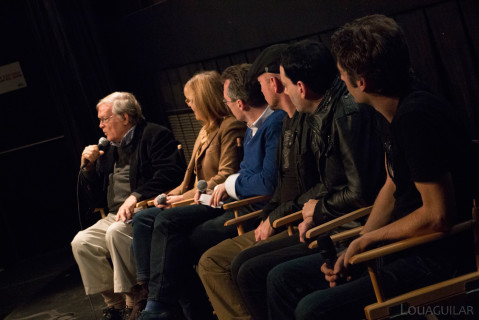
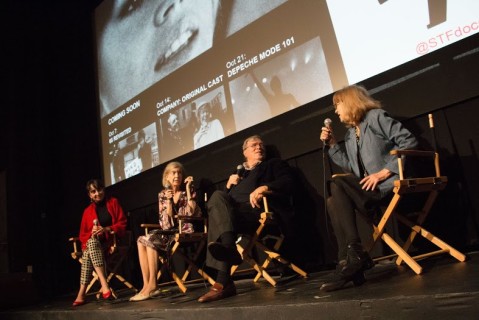
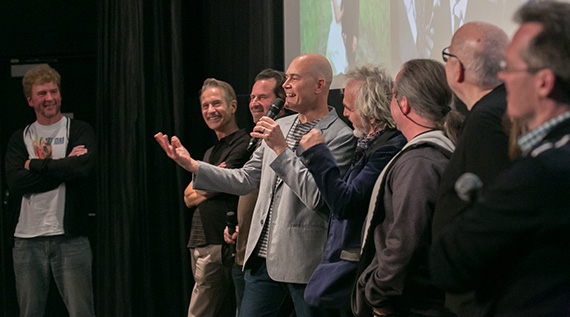
STF Artistic Director Thom Powers in conversation with D A Pennebaker, Chris Hegedus and three Depeche Mode superfans. © Lou Aguilar

This post was written by STF blogger Krystal Grow.

The iconic synth-pop band Depeche Mode took their name from the French words for ‘fast fashion,’ and as they set out on the road in 1988, with two 40 foot trailers, an emerald green jet and a convoy of tour buses loaded with young fans, they traveled at a nearly unrivaled speed.

This week’s installment of Stranger Than Fiction continued along it’s survey of DA Pennebaker and Chris Hegedus films, leaping from Dylan in the 60s and Broadway in the 70s to Depeche Mode 101 in the late 80s. In another of the duo’s candid music films, they follow the band on a tour across the US, where they were greeted by stadiums full of roaring crowds, who were fully submerged not only in the band’s hypnotic electro-pop, but also embraced and adopted their distinct sense of style.

“I’d never heard their music before. I didn’t know anything about them,” Pennebaker said in the Q&A following the film. “So I went to see them live in San Fransisco, and it was like they had this crowd there that just existed solely for them. After that I knew we needed to make the film.”
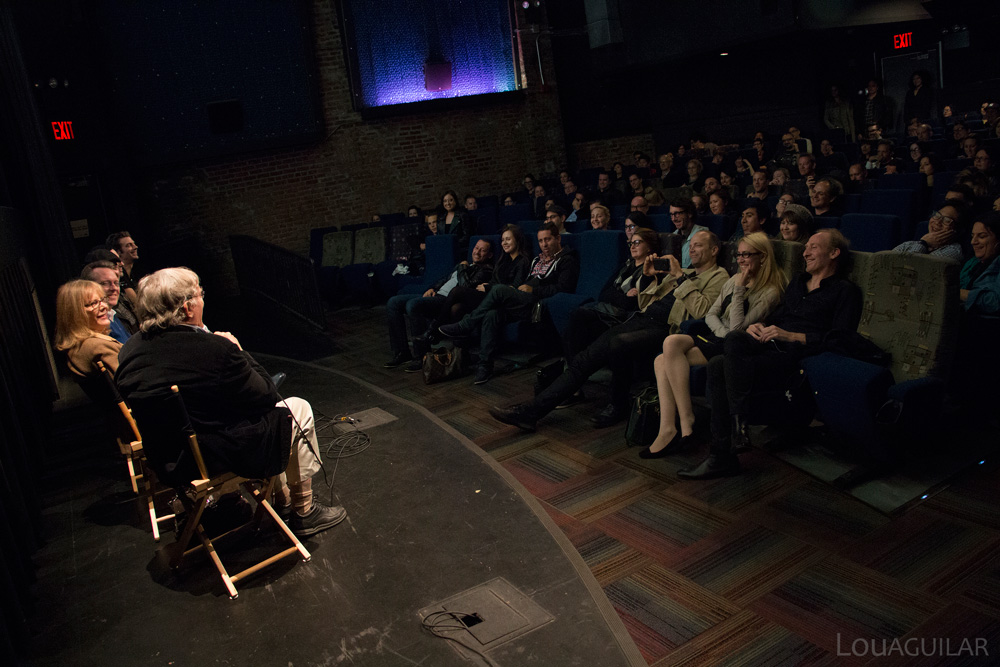
Q&A following the screening of DEPECHE MODE 101 © Lou Aguilar

And so began the verite-journey into the weird world of goth-pop-arena-rock, a genre that peaked with Depeche Mode‘s Music for the Masses tour and captured the strange cultural zeitgeist of the late 80s. The music was as anti-establishment as Pennebaker and Hegedus’ off-the-cuff filmmaking, but also had a melodic elegance and youthful energy. Led by Dave Gahan’s smooth but powerful alto voice, the band had corralled a massive and dedicated fan base, which came out en masse to most of their stateside performances. That crowd was an essential part of the story for Pennebaker and Hegedus, so much so that they organized a radio call-in contest to recruit a small posse of super fans to follow the band towards their penultimate performance at the Pasedena Rose Bowl.

“The music was so original, but we felt like we needed something else,” Hegedus said, “so we came up with this contest to take these kids across the country.” Those kids, with their hair spray, hats and exceptionally outlandish outfits, bring the epic fandom that Depeche Mode inspired to an adorably accessible level as they navigate their way through a kind of boozy synth-pop summer camp.

Now well into their adulthood, three of the eight contest winners were on the scene at STF this week, and joined the Q&A with Pennebaker, Hegedus, and STF Artistic Director Thom Powers.

“When the film first came out, I really didn’t like it,” said super fan Oliver Chesler, who is now musician based in New York and well known for innovative and unusual electronic compositions. “Then again, I was such a fanatic I really didn’t think any video footage could capture what it was like to be there and to see them, but looking back now, you really did.”
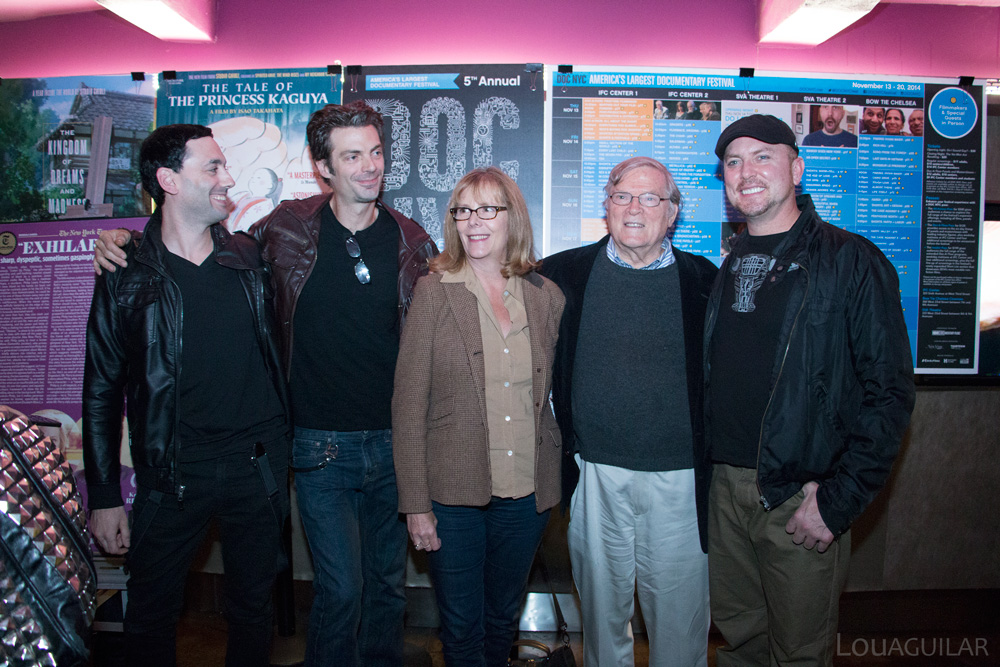
Filmmakers D A Pennebaker and Chris Hegedus with three Depeche Mode superfans, who won a radio call-in contest to travel cross-country to the band's 101 concert at the Pasadena Rose Bowl. © Lou Aguilar

Stranger Than Fiction’s twenty-fifth season features an eight-week tribute to the careers of D A Pennebaker and Chris Hegedus. In the week’s following, STF will show MOON OVER BROADWAY (1998) a look behind the scenes at Carol Burnett’s return to Broadway; THE WAR ROOM (1993) on Bill Clinton’s presidential campaign, featuring George Stephanopoulos and James Carville; and ONLY THE STRONG SURVIVE(2002) a celebration of soul-music legends Sam Moore, Wilson Pickett, Isaac Hayes and others.

For the full season lineup, visit stfdocs.com/buy-tickets/

Krystal Grow is an arts writer and photo editor based in New York. She has written for TIME LightBox, TIME.com, LIFE.com, the New York Times Lens Blog, the Magnum Foundation and the DOC NYC blog. Follow her on Twitter and Instagram @kgreyscale.
Bob Dylan and Otis Redding through D A Pennebaker’s Lens


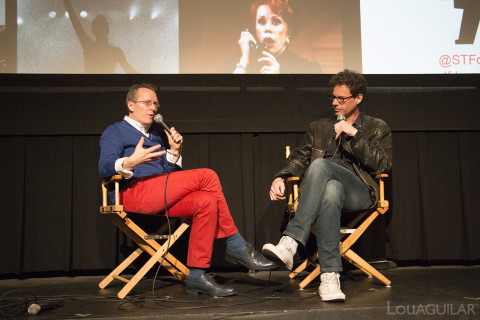
STF Artistic Director in conversation with filmmaker John Walter following the screening of D A Pennebaker's 65 REVISITED. © Lou Aguilar

This post was written by STF blogger Krystal Grow.

The mood at Stranger than Fiction last Tuesday night felt less like a movie theater and more like a concert hall where people struggled to stay still and burst into applause after the rousing performances and rare live footage that exploded from the big screen.

In the third installment of STF’s tribute to legendary filmmaker D A Pennebaker and his groundbreaking team, viewers had the incredible opportunity to see two seminal musicians in a display of raw power and pure emotion. In SHAKE: OTIS AT MONTEREY, Pennebaker brings Otis Redding’s full 1967 Monterey Pop Festival performance to the forefront. Redding’s performance was cut to two songs in the original version of MONTEREY POP, but the full four song set at Monterey exposed an almost completely unprepared audience to a 25-year-old powerhouse of early R&B. In a shimmering, emerald green suit and backed by all-star bands Booker T. and the MG’s and The Mar-keys on horns, Redding was electric, pulsating on stage with unbridled joy and pure Memphis soul that enraptured the California crowd, ‘the love crowd,’ as Redding fondly addressed them, who responded with booming, gleeful cheers.

On the flip side of Pennebaker’s psychedelic-era-epic, STF viewers were treated to outtakes from his starkly revealing and fascinating black and white motion-picture-portrait of Bob Dylan. 65 REVISITED pulls together footage from DONT LOOK BACK, a film that, much like MONTEREY POP, completely revolutionized the concert film/music documentary genre. Dylan, already a near-mythic figure by 1965, was on tour in the UK, being followed and fawned over by everyone he encountered, coyly dodging questions and toying with expectations until the moment he walked on stage. Through Pennebaker’s lens, Dylan is like a monolith, completely alone, basked in a glaring white spotlight in the center of a massive stadium. Those performances, in front of thousands of people in concert halls across England, are jaw droopingly intense, but his back stage practice riffs and hotel room jam sessions are equally endearing in their accessibility. For all the fanfare and behind the deafening applause, Bob Dylan is actually just like every other musician. He fiddles with chord progressions and sometimes forgets lyrics. He casually tires out new songs on dusty old pianos, and occasionally stumbles on something brilliant, and Pennebaker catches it all.

 “I remember just watching DONT LOOK BACK over and over and over again, basically teaching myself how to make documentary films,”  said filmmaker and STF alum John Walter, who joined STF Artistic Director Thom Powers for the Q&A following the screening. “I love the way he’s able to work with a single camera. He almost anticipates Dylan’s movements, and has some daring to follow through.”

Walter, who directed HOW TO DRAW A BUNNY, a documentary about eccentric pop artist Ray Johnson, said he admired Pennebaker’s completist approach to filmmaking, pulling every piece of information into the frame, and allowing the scene to speak for itself. “I love that ethic, aside from the gritty, raw feel of this film, that everything is part of the frame. That everything should be included. A documentary shooter would get in trouble for that sort of thing now.”

For all the trouble Pennebaker may have caused in making these exceptional films, his influence is still broad and far reaching in the documentary world, largely due to the success of MONTEREY POP and DONT LOOK BACK, which makes these perhaps unfairly named ‘outtakes,’ so special to see. They are the raw material behind the big picture, and a rare insight into two towering figures in music history that Pennebaker and his team captured at key moments in their careers, and that we’re lucky enough to see through his lens.

Stranger Than Fiction’s twenty-fifth season features an eight-week tribute to the careers of D A Pennebaker and Chris Hegedus. In the week’s following, STF will show COMPANY: ORIGINAL CAST ALBUM (1970) featuring the late Elaine Stritch wrestling with Stephen Sondheim’s musical Company; DEPECHE MODE 101 (1989) following the pioneer synth/pop band across America as they end up selling out the Rose Bowl; MOON OVER BROADWAY (1998) a look behind the scenes at Carol Burnett’s return to Broadway; THE WAR ROOM (1993) on Bill Clinton’s presidential campaign, featuring George Stephanopoulos and James Carville; and ONLY THE STRONG SURVIVE(2002) a celebration of soul-music legends Sam Moore, Wilson Pickett, Isaac Hayes and others.

For the full season lineup, visit stfdocs.com/buy-tickets/

Krystal Grow is an arts writer and photo editor based in New York. She has written for TIME LightBox, the New York Times Lens Blog and the DOC NYC blog. Follow her on Twitter and Instagram @kgreyscale.

An evening with the filmmakers of JANE


STF Executive Director Raphaela Neihausen in conversation with filmmakers Hope Ryden, D A Pennebaker and editor Nell Cox, following the screening of JANE. © Lou Aguilar

This post was written by STF blogger Krystal Grow.

Jane Fonda- activist, fitness guru, Hollywood sweetheart, and Broadway flop. If that last one comes as a shock, it’s probably because, like so many people, you haven’t had the opportunity to see D A Pennebaker’s lovely but rarely-shown documentary JANE, which was screened last week as part of the fall season of the Stranger Than Fiction film series.

By 1962, the 25 year-old Fonda, daughter of towering Hollywood icon Henry Fonda, had already appeared in a number of films, but was feverishly rehearsing for a theater production that she hoped would establish her as a serious stage actress, an independent talent, and a viable leading woman. Pennebaker, along with a skeletal crew of fellow filmmakers, followed Fonda and the rest of the ill-fated cast of The Fun Couple, from disastrous dress rehearsals to warm-up shows in Baltimore, Philadelphia and Wilmington, right up through it’s dismal 3-show Broadway run.

“We all knew the play barked- it was no revelation,” Pennebaker said in the Q&A following the film, “but when she read [the reviews], I loved her, and I thought ‘How brave of her,’ to be filmed like that, in that moment of despair.”

In the film, Fonda is charming and demure, meticulously applying her own makeup before shows, gushing when her director-boyfriend Andreas Voutsinas would deliver her lavish gifts backstage. But she is also arrestingly vulnerable through Pennebaker’s lens, as he captures fine details and minute inferences and interactions that are actually packed with intensity and intrigue.

“Watching the film was really weird, and made me feel horrible in a lot of ways,” Pennebaker said. “She had been through some terrible moments before then, but that play flopping may have been one of the worst.”

But a bad play made for more drama off stage, and while neither Pennebaker nor his colleagues expected the production to be a total failure, they followed the story to it’s bitter end.

“We didn’t know it was going to be a flop, but when we realized it was going to be, we decided to make the best of it and be honest about what it was,” said Hope Ryden, who worked on the film with Pennebaker and joined the Q&A at the IFC Center. “If the play had been a success, the film wouldn’t have been as good, or as soulful. It wouldn’t have been the same film.”

JANE played as part of Stranger Than Fiction’s twenty-fifth season which features an eight-week tribute to the careers of D A Pennebaker and Chris Hegedus. In the week’s following, STF will show 65 REVISITED (1967) capturing another side of DONT LOOK BACK’S Bob Dylan; COMPANY: ORIGINAL CAST ALBUM (1970) featuring the late Elaine Stritch wrestling with Stephen Sondheim’s musical Company; DEPECHE MODE 101 (1989) following the pioneer synth/pop band across America as they end up selling out the Rose Bowl; MOON OVER BROADWAY (1998) a look behind the scenes at Carol Burnett’s return to Broadway; THE WAR ROOM (1993) on Bill Clinton’s presidential campaign, featuring George Stephanopoulos and James Carville; and ONLY THE STRONG SURVIVE(2002) a celebration of soul-music legends Sam Moore, Wilson Pickett, Isaac Hayes and others.

For the full season lineup, visit stfdocs.com/buy-tickets/

Krystal Grow is an arts writer and photo editor based in New York. She has written for TIME LightBox, the New York Times Lens Blog and the DOC NYC blog. Follow her on Twitter and Instagram @kgreyscale.


Q&A: Barry Avrich on Lew Wasserman, THE LAST MOGUL


Filmmaker Barry Avrich answers audience questions following the STF screening of his film about Hollywood mogul Lew Wasserman. © Jasmin Chang

This post was written by STF blogger Krystal Grow.

There was a time when movies were made by men with relentless energy and a uncompromising quest for greatness who made some of the biggest films in Hollywood history possible, and changed the landscape of how major motion pictures were made forever.

Lew Wasserman grew up on the “rat infested” east side of Cleveland and got his start in show business in speakeasies and brothels in the 1920s, where he became good friends with rising stars and influential mobsters. In 1936, he became a publicist for MCA, then a musical booking agency with intricate ties to the Chicago mob. By 1938, MCA was managing 90 percent of the Chicago’s nightlife talent.

Over the next four decades, Wasserman transformed MCA from a one-trick booking agency to a multi-platform conglomerate, producing radio shows and motion pictures, and later spearheading the company’s foray into television, a move many other entertainment agencies and media companies were reluctant to make. But Wasserman, now a power player in Hollywood with a roster of influential friends, executed a strategy that allowed him and his company to dominate a fledgling medium, producing shows like Alfred Hitchcock Presents, Amos and Andy, Dragnet, Wagon Train and The Jack Benny Program.

He also pioneered the TV mini-series, an innovation that further solidified his role as a force to be reckoned with in the increasingly competitive world of movies and television. In a deal that was unheard of for it’s time, he brokered the purchase of Paramount Pictures’ entire pre-1950s archive, which he ran in syndication, another first for the last great Hollywood mogul.

As famous for his commanding demeanor as he was for his resistance to accolades and public appearances, Wasserman captivated director Barry Avrich to follow his career for much of his life. Avrich committed to the idea of making a film about his legendary status among Hollywood high rollers.

“I was one of those nerdy kids reading Variety from age eight, so I followed him and I watched him and I was amazed at him and the entirety of his career. I knew that this was going to be a complex film to make about six decades of power,” Avrich said in a Q&A following the screening of the film at the Stranger than Fiction series at the IFC Center. A revealing look into the man behind mega hits like JAWS, THE STING and AMERICAN GRAFFITI, THE LAST MOGUL is a film as much about an individual career as it is about an entire industry, one that’s seen drastic change at the hands of technology, consumer culture and the constantly evolving Hollywood studio system. It’s a chronicle of one man’s unprecedented rise to power, and a shocking and complicated series of missteps and bad deals that led to his demise. But the legend he left in his wake shaped the way Hollywood as a whole functioned, and left generations of would-be moguls still struggling to achieve even a fraction of his greatness.

FULL Q&A

Thom Powers: What got you started on making a film about Lew Wasserman?

Barry Avrich: I met Lew and I told him I wanted to make a film about him and he said, ‘It’ll never happen whether I’m alive or dead.’

Powers: What did you know about Wasserman that made you want to know more about his career?

Avrich: I was one of those nerdy kids reading Variety from age 8, so I followed him and I watched him and I was amazed at him and the entirety of his career. I knew that this was going to be a complex film to make six decades of power. And the Wasserman family came after me big time. I’d have interviews scheduled with major power players and [the family] would make phone calls and say, “No, you’re not going to participate in that film” and then I’d have doors slammed in my face, and in studios setting up. I was followed. I was threatened.

Powers: But for all that you have some incredible power players, Jack Valenti, President Jimmy Carter, big producers…

Continue reading…


Q&A: Paul Devlin and The Loaded Poets


Director Paul Devlin leads a Q&A with his film subjects, members of the band The Loaded Poets following an STF screening of THE FRONT MAN.
© 8 Salamander Productions, Simon Luethi

This post was written by STF blogger Krystal Grow.

Following the STF screening of THE FRONT MAN, filmmaker Paul Devlin leads a Q&A with his film subjects, members of the band The Loaded Poets and their musician friends.

FULL Q&A

Thom Powers: How did you start filming this and what was the evolution of this film.

Paul Devlin: Well, it started because I had to answer the question of “what’s your next movie?” and I was doing a lot of different projects and I said to Jim one day, “I’m just going to start showing up with a camera every time we get together and see what happens,” and it was really just for fun at first and we had a really good time. It was a lot of laughs, and we were just joking around. And then things started to evolve and the ‘baby no baby’ sequence happened, and then she actually got pregnant, and then I realized “ok this is more than just a gag.” And then we just kept shooting and I would do other films and drop it for a year or two and then Jim would say that something was happening and we’d start again and I’d edit through the whole thing, and then we brought Glen and Graham into it and that brought a whole other dimension to it.

Powers: Jim, from your end, Paul followed you around with a camera for many, many years. What did you think of this process?

Jim Wood (The Loaded Poets, vocals): I loved it. Paul said, “I want to follow you around with a camera and see if anyone who doesn’t know you will think you’re funny,” which is kind of insulting, you know, but by the time we played it to a room full of strangers and they liked the film, I said “We’re done, mission accomplished.” It was over a long, long period of time, so there would be months, almost years where nothing would happen at all. I think the most profound thing for me is watching myself, taking a step back and watching my life on screen. He fixed my life in the editing, you know? So, I now realize I’m leading a charmed life because of the film. Whereas in the day-to-day shooting, it’s not so great.

Continue reading…