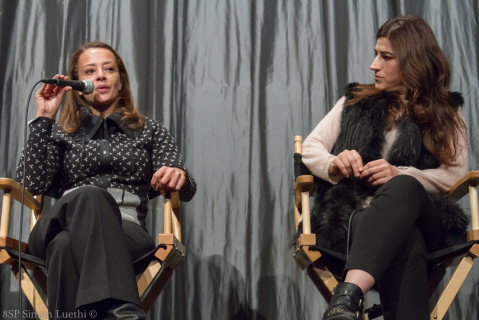
Directors Mona Eldaief and Jehane Noujaim discuss the twists and turns of RAFEA: SOLAR MAMA
It’s unclear whether the titular character in Rafea: Solar Mama would personally identify as a “feminist.” Still, the women in Jehane Noujaim and Mona Eldaief’s documentary are certainly committed to advancing the roles of women in otherwise male-dominated cultures. The film follows Rafea and her aunt, Umm Badr, as they leave their families in Jordan and travel to The Barefoot College in India to study solar engineering alongside women from Kenya and Colombia. They are determined to develop skills that will allow them to better their own lives and the lives of those in their village, but the men at home remain unconvinced that this is the correct goal for women to pursue. The challenges that Rafea and Umm Badr face are ongoing, well past the narrative depicted in the film, but their ambition and desire for a better, more sustainable future is clear. Rafea: Solar Mama, which won the Audience Award at DOC NYC last fall, demonstrates that while no advancement in gender equality comes quickly and easily, hope and perseverance is what makes change possible.
After Tuesday’s screening, STF’s Thom Powers led a discussion with Noujaim, Eldaief, and a special guest.
Continue reading…
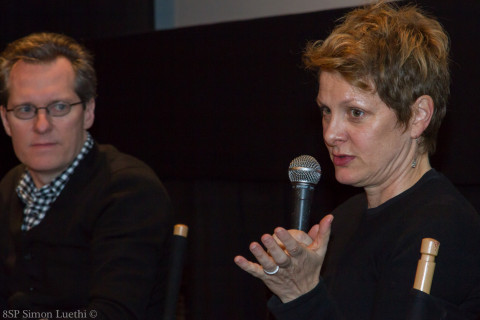
Amy Nicholson shares her passion for the ride that inspired ZIPPER.
When Amy Nicholson set out to produce Zipper: Coney Island’s Last Wild Ride, she planned to make a short film about the titular amusement park ride. After decades of providing fun and excitement to Coney Island’s visitors, the Zipper was set to retire. It was only after Nicholson began to question the reasons why the ride was leaving that she expanded the scope of the documentary to tell the story of Coney Island’s controversial development plans and the fight to preserve the neighborhood’s history and character. Zipper takes viewers inside the corridors of City Hall and along the boardwalk to explore the various perspectives on Coney Island’s evolving identity. If you’ve ever wondered how buildings and neighborhoods change so quickly, Zipper can serve as a primer.
The screening was packed with STF regulars and Zipper’s cast and crew. When the film ended, Nicholson joined STF’s Thom Powers for a discussion.
Continue reading…
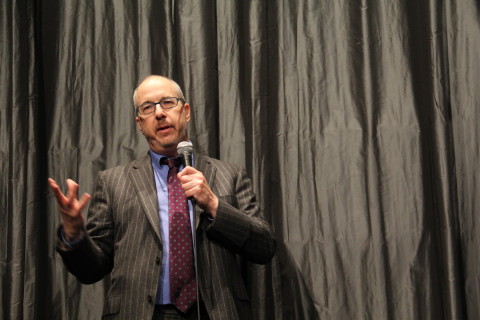
Neil Barsky discusses Ed Koch's life and legacy. Photo by Cathryne Czubek.
Toward the end of Koch’s post-screening Q&A on Tuesday, an audience member asked director Neil Barsky about Edward Koch’s health. Barsky revealed that the former mayor of New York City and subject of his film had been hospitalized and was being treated for congestive heart failure. Early this morning, only days after the screening, Koch passed away at 88 years old.
It is a fitting memorial that Koch, a documentary about the mayor’s life and career, screened at Stranger Than Fiction on Tuesday and opens in limited theatrical release today. The film is filled with recent interviews and archival footage of Koch, underscoring the fact that he lived for the camera. In addition to the unflinching exploration of Koch’s celebrated and controversial political career, the film offers a rare glimpse into the personal life of the famously private mayor. Koch was masterful in his ability to construct his public image, and the documentary highlights the stark differences between the man’s public persona and private reality, exposing the nuances that have made him a fascinating figure for over 30 years.
Below is the full conversation between Barsky and STF’s Thom Powers.
Continue reading…
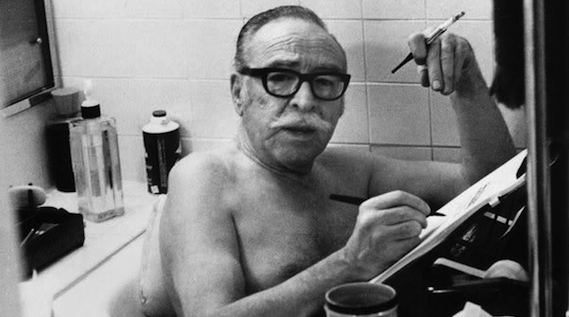
TRUMBO tells the story of Dalton Trumbo's life through his letters.
How do you produce a documentary about a person who passed away well before the film was even conceptualized? You can include archival footage from when the subject was still alive; you can feature interviews with the subject’s surviving friends and relatives; or, you can recreate the subject’s voice through performance. Peter Askin combined all of these approaches when he directed Trumbo, his film about the famous blacklisted screenwriter. Though archival footage and sit-down interviews with family, friends, and colleagues provide critical context about Dalton Trumbo’s life and struggles, the heart of the film lies in the performances of Trumbo’s written words. Liam Neeson, Paul Giamatti, Brian Dennehy, and David Strathairn are among the actors who read letters that Trumbo wrote throughout his career, bringing his voice to life. Trumbo’s letters reveal the humor, stubbornness, and personal conviction that were necessary for his survival during his years in jail and in exile from Hollywood. By building the rest of the film around the letters, Askin has positioned Trumbo as the narrator of his own story.
After the screening, Askin joined filmmaker and friend of STF, Hugo Perez, for a discussion.
Continue reading…
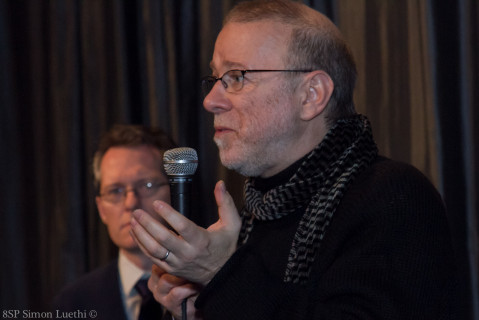
Alan Berliner discusses memory, poetry, and the process of making First Cousin Once Removed
When director Alan Berliner introduced First Cousin Once Removed on Tuesday, he told the STF audience, “Making this film challenged every assumption I’ve ever had about the notion of memory.” The film is a portrait of Berliner’s cousin, Edwin Honig, a poet and teacher who spent the last years of his life suffering from Alzheimer’s disease. Berliner interviewed Honig on multiple occasions, documenting different stages of his dementia. The resulting film is a visually poetic exploration of memory, family, and identity. Honig passed away in 2011, but Berliner shared his hope that “with this film, I’ve preserved Edwin’s mind.” After the screening, Berliner joined STF’s Thom Powers for a conversation about his relationship with Honig and the filmmaking process.
Continue reading…





