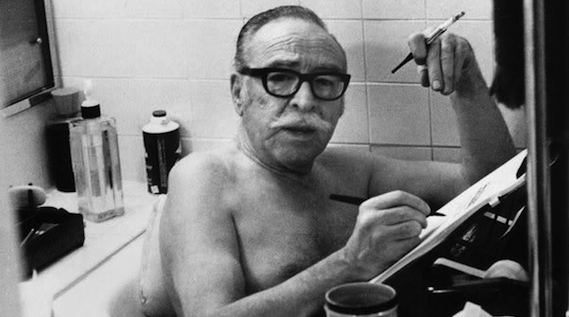
TRUMBO tells the story of Dalton Trumbo's life through his letters.
How do you produce a documentary about a person who passed away well before the film was even conceptualized? You can include archival footage from when the subject was still alive; you can feature interviews with the subject’s surviving friends and relatives; or, you can recreate the subject’s voice through performance. Peter Askin combined all of these approaches when he directed Trumbo, his film about the famous blacklisted screenwriter. Though archival footage and sit-down interviews with family, friends, and colleagues provide critical context about Dalton Trumbo’s life and struggles, the heart of the film lies in the performances of Trumbo’s written words. Liam Neeson, Paul Giamatti, Brian Dennehy, and David Strathairn are among the actors who read letters that Trumbo wrote throughout his career, bringing his voice to life. Trumbo’s letters reveal the humor, stubbornness, and personal conviction that were necessary for his survival during his years in jail and in exile from Hollywood. By building the rest of the film around the letters, Askin has positioned Trumbo as the narrator of his own story.
After the screening, Askin joined filmmaker and friend of STF, Hugo Perez, for a discussion.
Continue reading…
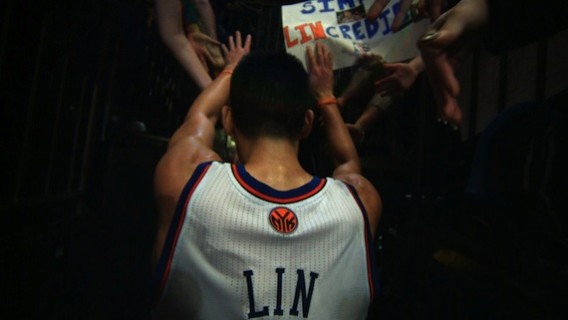
LINSANITY, directed by Evan Jackson Leong, showing in Sundance's Doc Premieres section.
I asked filmmakers in Sundance’s Documentary Premieres Section to describe what attracted them to their subject and what conversations they hope their film will start. Below are responses from 5 of the 11 films. As I receive others, I’ll update this page. See previous posts on the US Documentary Competition and World Documentary Competition Thanks to Lauren Kraus for helping me compile this survey.
Lucy Walker, The Crash Reel, @lucyjwalker, @thecrashreel
I wanted to make The Crash Reel from the first moment that I met snowboarder Kevin Pearce. Kevin was training for the Olympics and vying with rival Shaun White when he sustained a severe Traumatic Brain Injury, which put him in a coma fighting for his life. No sooner did he learn to walk and talk again, he wanted to snowboard, and here’s where the story gets even more dramatic, because his brain wasn’t telling him how injured he was, and if he hits his head again he’ll die. We want to raise awareness about Traumatic Brain Injury through film and also our campaign #loveyourbrain, and to ask questions about safety and risk in Action Sports, and about head injuries in sports – but it’s a movie first and foremost, all told in compelling, thrilling verite scenes, with a lot of emotion and story and no lectures or experts in sight.
Continue reading…

PUSSY RIOT - A PUNK PRAYER plays in Sundance's World Documentary Competition.
I asked filmmakers in Sundance’s World Documentary Competition to describe what attracted them to their subject and what conversations they hope the film will start. Below are responses from 9 of the 12 films. As I receive others, I’ll update this page. In a future post, we’ll hear from directors in the Doc Premieres section. See the previous post on the US Documentary Competition. Thanks to Erik Spink for helping me compile this survey.
Zhao Qi, Fallen City
I remember feeling the first jolts in my office in Beijing that day on May 12th, 2008. An hour later, we learned there had been an earthquake in Sichuan. When I set foot in the worst-hit city Beichuan 3 days after the earthquake, it was a sea of wreckage before my eyes. No road was flat; no building was standing straight. Smoke and dust mixed with the smell of rotten corpses and disinfectants, wafted in the air.
Continue reading…
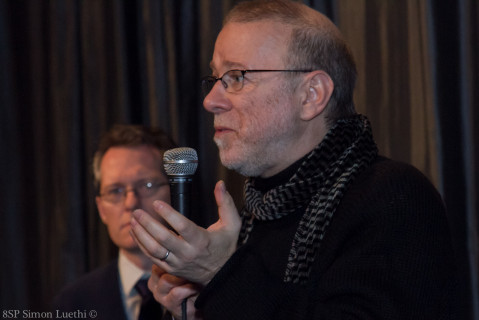
Alan Berliner discusses memory, poetry, and the process of making First Cousin Once Removed
When director Alan Berliner introduced First Cousin Once Removed on Tuesday, he told the STF audience, “Making this film challenged every assumption I’ve ever had about the notion of memory.” The film is a portrait of Berliner’s cousin, Edwin Honig, a poet and teacher who spent the last years of his life suffering from Alzheimer’s disease. Berliner interviewed Honig on multiple occasions, documenting different stages of his dementia. The resulting film is a visually poetic exploration of memory, family, and identity. Honig passed away in 2011, but Berliner shared his hope that “with this film, I’ve preserved Edwin’s mind.” After the screening, Berliner joined STF’s Thom Powers for a conversation about his relationship with Honig and the filmmaking process.
Continue reading…
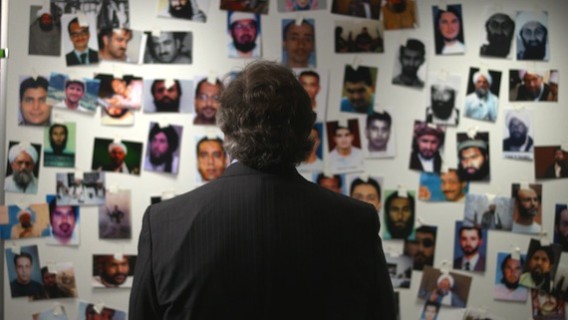
MANHUNT, directed by Greg Barker, premieres in Sundance Documentary Competition.
I asked filmmakers in Sundance’s US Documentary Competition to describe what attracted them to their subject and what conversations they hope the film will start. Below are responses from 13 of the 16 films. As I receive others, I’ll update this page. In future posts, we’ll hear from directors in the World Competition and Doc Premieres section. Thanks to Erik Spink for helping me compile this survey.
Audrey Ewell, 99% – The Occupy Wall Street Collaborative Film, @99_film, @AudreyEwell
When people take to the streets en masse in your country and a national and even worldwide movement takes off, how do you NOT get interested in that? Not only has this not happened in my lifetime, it’s also fundamentally different than justice movements of the past. And I’d be lying if I said that the experimental process we employed on the film wasn’t also a little bit intriguing to me.
Our film not only goes behind the scenes of the Occupy movement to reveal what really happened and what it was and is all about, it also exposes the latticework of corporate, financial and political power operating behind the vestige of American democracy. Monumental economic and social decisions are being made, and if people don’t involve themselves in those conversations, their interests simply aren’t being protected. This film doesn’t really leave any room for doubt about that. The only question is, where does it go from here? And that’s an answer that can only be answered over time. This film lays the framework for us to understand the factors that got us into such a mess in the first place, and at the explosive birth and growth of this movement, so we may better understand what comes next.
Continue reading…





