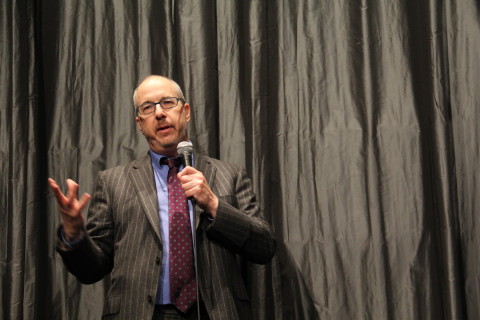
Neil Barsky discusses Ed Koch's life and legacy. Photo by Cathryne Czubek.
Toward the end of Koch’s post-screening Q&A on Tuesday, an audience member asked director Neil Barsky about Edward Koch’s health. Barsky revealed that the former mayor of New York City and subject of his film had been hospitalized and was being treated for congestive heart failure. Early this morning, only days after the screening, Koch passed away at 88 years old.
It is a fitting memorial that Koch, a documentary about the mayor’s life and career, screened at Stranger Than Fiction on Tuesday and opens in limited theatrical release today. The film is filled with recent interviews and archival footage of Koch, underscoring the fact that he lived for the camera. In addition to the unflinching exploration of Koch’s celebrated and controversial political career, the film offers a rare glimpse into the personal life of the famously private mayor. Koch was masterful in his ability to construct his public image, and the documentary highlights the stark differences between the man’s public persona and private reality, exposing the nuances that have made him a fascinating figure for over 30 years.
Below is the full conversation between Barsky and STF’s Thom Powers.
Continue reading…
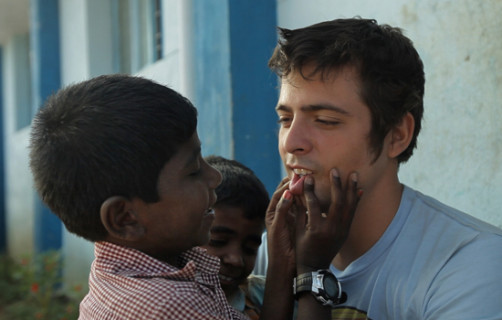
BLOOD BROTHER by Steve Hoover was the big winner at this year's Sundance festival.
Steve Hoover’s film BLOOD BROTHER, about American Rocky Braat who dedicates his life to working with HIV positive children living in an orphanage in India, was the big award winner at Sundance this year, taking home both the Grand Jury Prize and the Audience Award Prize for a U.S. documentary. The Grand Jury Prize for world cinema went to Kalyanee Mam for her film A RIVER CHANGES COURSE, about several families in Cambodia. You can find a full list of Sundance award winners here. Adam Benzine of Realscreen also had an awards recap, as did Bryan Alexander of USA Today. Benzine also provided a comprehensive recap of documentary news that came out of the festival.
Perhaps the biggest news to come out of the festival was that docs were selling well. The folks at Indiewire took on the task of rounding up all the acquisitions deals that were inked during Sundance (the list includes both docs and narratives). Daniel Miller and Tatiana Siegel of The Hollywood Reporter reported that a minimum of four docs sold for at least $1 million: PUSSY RIOT–A PUNK PRAYER by directors Mike Lerner and Maxim Pozdorovkin; THE SUMMIT by Nick Ryan, TWENTY FEET FROM STARDOM by Morgan Neville; and BLACKFISH by Gabriela Cowperthwaite. Josh L. Dickey and Jeff Sneider of Variety also reported that the high price tags commanded by many films may have frozen out smaller indie distributors.
Continue reading…
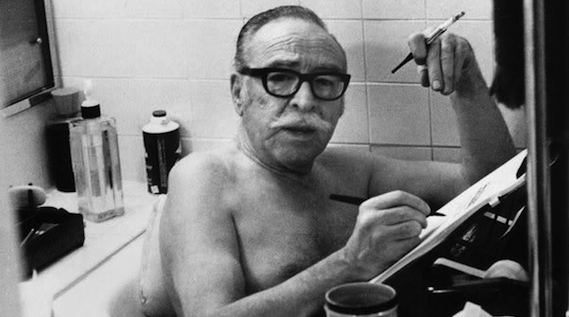
TRUMBO tells the story of Dalton Trumbo's life through his letters.
How do you produce a documentary about a person who passed away well before the film was even conceptualized? You can include archival footage from when the subject was still alive; you can feature interviews with the subject’s surviving friends and relatives; or, you can recreate the subject’s voice through performance. Peter Askin combined all of these approaches when he directed Trumbo, his film about the famous blacklisted screenwriter. Though archival footage and sit-down interviews with family, friends, and colleagues provide critical context about Dalton Trumbo’s life and struggles, the heart of the film lies in the performances of Trumbo’s written words. Liam Neeson, Paul Giamatti, Brian Dennehy, and David Strathairn are among the actors who read letters that Trumbo wrote throughout his career, bringing his voice to life. Trumbo’s letters reveal the humor, stubbornness, and personal conviction that were necessary for his survival during his years in jail and in exile from Hollywood. By building the rest of the film around the letters, Askin has positioned Trumbo as the narrator of his own story.
After the screening, Askin joined filmmaker and friend of STF, Hugo Perez, for a discussion.
Continue reading…
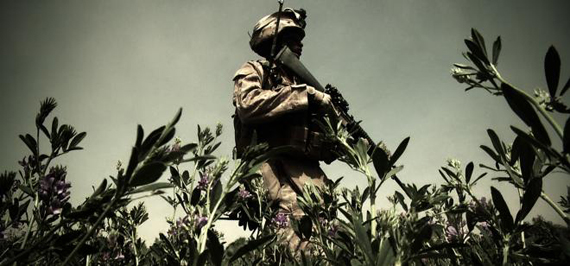
The film DIRTY WARS by director Richard Rowley was one of several docs to screen at Sundance thus far.
The week documentary news was dominated by the start of the Sundance Film Festival, which began Thursday, Jan. 17. On Sundance’s blog, Eric Hynes and other writers recapped Day Two of the festival, with a strong focus on docs. On the POV blog, Tom Roston interviewed two of the festival’s senior programmers, David Courier and Caroline Libresco. Roston also highlighted a few films screening at the festival, FIRE IN THE BLOOD by Dylan Mohan Gray; THE WORLD ACCORDING TO DICK CHENEY by R.J. Cutler; and WHICH WAY TO THE FRONT LINE FROM HERE? THE LIFE AND TIME OF TIM HETHERINGTON by Sebastian Junger. The Hetherington doc was also profiled by Stuart Hughes of the BBC.
Los Angeles Times critic Kenneth Turan also provided his own overview of the docs set to screen at Sundance, while Karen Kemmerle of the Tribeca Future of Film blog highlighted some Twitter feeds worth following during the festival. Mark Olsen had coverage of the film AFTER TILLER by Martha Shane and Lana Wilson, while Eric Kohn wrote up BLACKFISH for Indiewire. At The Hollywood Reporter, John DeFore reviewed Richard Rowley and Jeremy Scahill’s film DIRTY WARS. Shiela Nevins of HBO spoke with Brooks Barnes of the New York Times about the film LIFE ACCORDING TO SAM.
There was also an abundance of interviews with Sundance filmmakers being churned out this week. The Filmmaker Magazine blog had one with CRASH REEL director Lucy Walker, while Jim Allen of the website talked with musician Dave Grohl, director of the doc SOUND CITY. At Realscreen, Adam Benzine had an interview with director R.J. Cutler, while Kelly Anderson chatted with Morgan Neville, director of TWENTY FEET FROM STARDOM. And Slovej Schou spoke with STORIES WE TELL director Sarah Polley for Entertainment Weekly.
Continue reading…
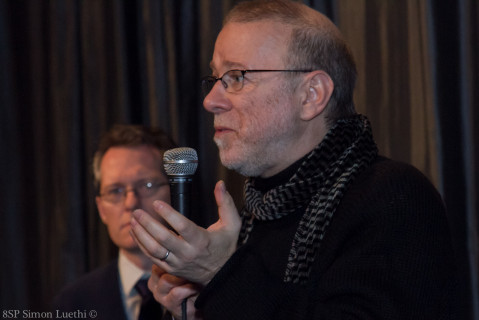
Alan Berliner discusses memory, poetry, and the process of making First Cousin Once Removed
When director Alan Berliner introduced First Cousin Once Removed on Tuesday, he told the STF audience, “Making this film challenged every assumption I’ve ever had about the notion of memory.” The film is a portrait of Berliner’s cousin, Edwin Honig, a poet and teacher who spent the last years of his life suffering from Alzheimer’s disease. Berliner interviewed Honig on multiple occasions, documenting different stages of his dementia. The resulting film is a visually poetic exploration of memory, family, and identity. Honig passed away in 2011, but Berliner shared his hope that “with this film, I’ve preserved Edwin’s mind.” After the screening, Berliner joined STF’s Thom Powers for a conversation about his relationship with Honig and the filmmaking process.
Continue reading…





