Gary Hustwit, the director of HELVETICA, kindly visited my NYU class on Thursday to dispense his wisdom about self-distribution. This topic has a rising interest in the film world. But few people have as much real world experience as Hustwit. Next week, PBS’ Independent Lens will show his latest work OBJECTIFIED in an hour-long version (shorter than the theatrical release).
Here are some highlights from his class talk:
* Nine months before the theatrical release of HELVETICA, Hustwit began blogging about the film as a way to gain interest. A small mention on the graphic designer website typophile.com drove the first visitors to helveticafilm.com and eventually Hustwit had collected thousands of email addresses from visitors. He began selling Helvetica posters and t-shirts, grossing $75,000 on merchandise before the film was even released. “The audience wants to see the film as much as you do,” said Hustwit. By selling merchandise, “you make it easy for them to help you.”
Here in Copenhagen at the CPH:Dox Forum, I’ve been reflecting on the multiplying new initiatives in film distribution. Amidst anxiety about broadcasters’ shrinking budgets, CPH is fostering ideas for filmmakers to gain greater distribution control. Tomorrow I will moderate a conversation with the filmmaker Jon Reiss who’s sharing advice from his experiences self-distributing the graffiti doc BOMB IT. He wrote two comprehensive articles for Filmmaker Magazine on My Adventure in Theatrical Distribution and My Adventure in Home Video that became the seeds for his new book Thinking Outside the Box Office.
I don’t mean to imply we’re looking at a future without distributors. But we can expect more creative partnerships in “hybrid distribution.” Last week, a proselytizer of this future, Brian Newman – the former director of the Tribeca Film Institute – spoke to my NYU class. He made a simple statement that snapped into focus a growing sense I’ve had since the Toronto International Film Festival two months ago. Newman said that going forward, filmmakers won’t go to festivals to find a distributor, but to find an audience.
Sure, we’ll continue to see a smattering of festival sales such as ART OF THE STEAL to IFC Films/Sundance Selects at TIFF. But other filmmakers will pursue a different plan by getting distribution in place before their fest debut. By this strategy, the fest premiere – and its unique ability to generate reviews, awards and attention – can promote subsequent bookings soon after, rather than wait several months (as happens with the acquisition model). Bigger distributors are accustomed to leveraging festival exposure for releases such as CAPITALISM: A LOVE STORY and GOOD HAIR that appeared in theaters shortly after TIFF. Perhaps in the coming year, we’ll see hybrid efforts do the same with smaller companies such as Argot Pictures, International Film Circuit, and Abramorama Films.
Last night flying to Copenhagen (where I hope to blog a report from CPH:DOX), I took the time to read Mark Rudd’s excellent memoir in anticipation of him coming to STF on Monday, Nov 16 for a special screening of THE WEATHER UNDERGROUND where he’ll be joined by filmmaker Bill Siegel. Last year, I had the chance to interview Rudd at the Toronto International Film Festival in conjunction with the epic work-in-progress documentary about the 1968 Columbia University student strike A TIME TO STIR. So I knew him to be thoughtful and self-critical. His book is full of lacerating reflections such as this:
September has been an invigorating month for hashing out independent distribution issues. In case you haven’t been closely following the reports, here are the highlights:
1) Liesl Copland’s keynote speech at TIFF’s Doc Conference addressed how to get the most out of theatrical, VOD, downloads and other formats. Part of her talk included a video on the “Social Media Revolution” that every filmmaker should take four minutes to watch on YouTube to get a sense of powerful new tools becoming available. On the topic of the theatrical experience for docs, Copland pointed to the model of Stranger Than Fiction, saying, “We can’t expect the smaller movies to go head to head with the big marketing giants. Maybe for us, for docs, we need to make sure the experience is differentiated, communal – let’s do more for the audience in that space than show the film. More ‘extra content’ at the theater, Q and A heaven. Curation.”
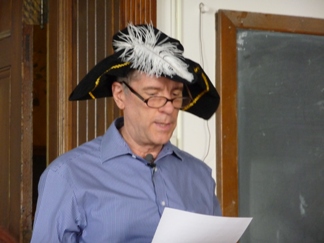
2) Peter Broderick’s “Declaration of Independence” at TIFF’s Doc Conference (pictured) laid out a set of principles for filmmakers who want to explore a form of hybrid distribution. In an article based on his speech, Broderick writes, “Today many filmmakers are as determined to retain ‘distribution control’ as they are to maintain ‘creative control.’ Distribution control is the power to determine the overall structure and sequence of distribution, select distribution partners, and divide up distribution rights. While single source production financing usually means the loss of some measure of creative control, single source distribution through an all-rights deal always means the loss of distribution control.”
I’m definitely intrigued by what I’ve read about the Chinese doc GHOST TOWN playing tomorrow at the New York Film Festival. Manohla Dargis writes, “ ‘Ghost Town,’ takes place in a world so removed from the pastoral it might as well be set on another planet and, in some respects, it is….directed with scrupulous attention to detail by Zhao Dayong. The China here, represented by the hard lives of different village folk… offers a grim contrast to the country racing toward the future.”
Watch a trailer, read more and buy a ticket at filmlinc.com


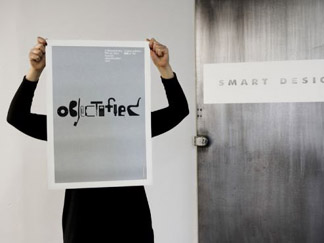 Gary Hustwit, the director of HELVETICA, kindly visited my NYU class on Thursday to dispense his wisdom about self-distribution. This topic has a rising interest in the film world. But few people have as much real world experience as Hustwit. Next week, PBS’ Independent Lens will show his latest work OBJECTIFIED in an hour-long version (shorter than the theatrical release).
 Here in Copenhagen at the CPH:Dox Forum, I’ve been reflecting on the multiplying new initiatives in film distribution. Amidst anxiety about broadcasters’ shrinking budgets, CPH is fostering ideas for filmmakers to gain greater distribution control. Tomorrow I will moderate a conversation with the filmmaker Jon Reiss who’s sharing advice from his experiences self-distributing the graffiti doc BOMB IT. He wrote two comprehensive articles for Filmmaker Magazine on
  Last night flying to Copenhagen (where I hope to blog a report from
  September has been an invigorating month for hashing out independent distribution issues. In case you haven’t been closely following the reports, here are the highlights: