A full house greeted the 87 year-old Richard Leacock as he made a special visit to Stranger Than Fiction from Paris. Among the luminaries in the audience were Albert Maysles and D.A. Pennebaker (see photo on left), Chris Hegedus, Robert Drew, George Stoney, Kevin Rafferty, and many others. Titled THE AUTOBIOGRAPHY OF RICHARD LEACOCK, the evening was a sampling of various films and clips from Leacock’s illustrious career. The evening started out with a screening of Leacock’s very first film – CANARY BANANAS (1934) – shot when he was only 13 years old. This 7 minute short was intended to convey the “bliss” of his life in the Canary Islands to his classmates in his boarding school in England. “Instead”, he laughs, “it became a commercial for my father’s banana plantation”. The next film THE CHILDREN WERE WATCHING (1961) tells the story of a white New Orleans school legally forced to integrate four black students, and the surrounding hatred and racism of the situation. Leacock describes one scene, where he is in the house of a family supporting integration while outside the anti-integration people are banging on the windows and doors, as being “more frightening than being a combat photographer in WWII.” The last clip was from his most recent film MUSICAL ADVENTURE IN SIBERIA which he shot with his daughter Victoria in 1996.
In addition to his film career, Richard Leacock also discussed the book he has been writing for the last several years, describing the experience as “just as enjoyable as making films”. The electronic book will feature 97 films that can be interactively accessed while reading. We all impatiently await its release!
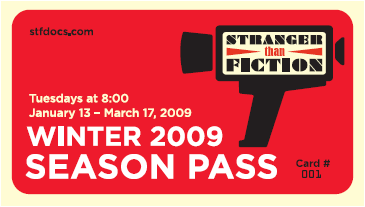
Do the math: you get 3 special screenings in Dec, plus the 10 regular season films in Jan – Mar. That’s 13 films for $95 or ~$7 per film.
But that’s not all! Your Winter Season pass also gets you these great perks:
1) two free DVDs from Docurama;
2) free popcorn at every STF show;
3) assurance that you never miss a sold out show;
4) the ability to transfer your pass to a friend, if you can’t come;
5) week-round drink specials at “99 Below”
A lush culinary feast accompanied the screening for the newly-HBO-acquired documentary A TABLE IN HEAVEN. True to expectation, the buffet style stations featured a mouthwatering menu of tender roasted beef, asparagus risotto, and a vast array of other savory items. As for the desserts – there were too many to count! In case there were any doubts, I must say that Le Cirque definitely lives up to its reputation.
Martha Stewart was one of many socialites and Le Cirque patrons in attendance
Held at the Tribeca Cinemas, the annual Gotham Film Party was hosted by Kodak and featured many familiar faces. Here are a few snapshots from the night.
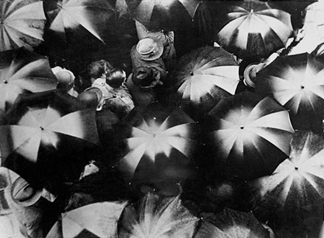
Auteurism had Andrew Sarris. Abstract expressionism had Clement Greenberg. Punk rock had Lester Bangs. Where is the equivalent voice for today’s documentary scene? In the past, nonfiction film has drawn the attention of a few notable critics. Starting in the 1920’s, John Grierson actively championed the form. His generation gave way to the breakthroughs in direct cinema, covered by Jonas Mekas for the Village Voice and the “Living Room War” of Vietnam, analyzed by Michael Arlen for The New Yorker. Back then, documentary filmmakers were still dreaming of a future when equipment would be cheaper and distribution more accessible. Now, thanks to digital technology, that future has arrived. But America’s critical arbiters have lagged behind. Newspapers and magazines still follow the customs of an old era, squeezing in the occasional documentary review between saturation coverage of Hollywood dramas and comedies.
Two years ago, I lamented this state of affairs for an Indiewire survey titled “Wrapping 06 and Looking Ahead at 07.” Around that time, I was plowing through myriad Top Ten lists with dismay over the propensity of critics to name ten fiction films and one token documentary. I suggested that newspaper and magazine editors look to the example of book reviews by distinguishing between fiction and nonfiction lists and cultivate critics who can specialize in the latter.
Now the situation has grown even worse. Documentary filmmakers are increasing their output, but publications are decreasing staff and space for reviews. Bloggers fill some of the void. But the pressure on blogs to be quick and current leaves a gap for more thoughtful analysis. For any critic who wants to delve into documentary, an exciting job awaits. But the job is not likely to be offered. It has to be seized.




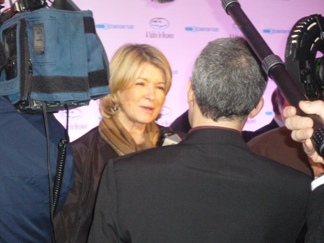 Martha Stewart was one of many socialites and Le Cirque patrons in attendance
 Ann Rose of the Sundance Channel with Dia Sokol.
 Auteurism had Andrew Sarris. Abstract expressionism had Clement Greenberg. Punk rock had Lester Bangs. Where is the equivalent voice for today’s documentary scene? In the past, nonfiction film has drawn the attention of a few notable critics. Starting in the 1920’s, John Grierson actively championed the form. His generation gave way to the breakthroughs in direct cinema, covered by Jonas Mekas for the Village Voice and the “Living Room War” of Vietnam, analyzed by Michael Arlen for The New Yorker. Back then, documentary filmmakers were still dreaming of a future when equipment would be cheaper and distribution more accessible. Now, thanks to digital technology, that future has arrived. But America’s critical arbiters have lagged behind. Newspapers and magazines still follow the customs of an old era, squeezing in the occasional documentary review between saturation coverage of Hollywood dramas and comedies.