What Hugh Hefner’s Playboy Mansion and Andy Warhol’s Factory were to the international jet-set of the 1960s, Larry Levinson’s infamous sex-club Plato’s Hideaway was to working class New York in the late seventies and early eighties. Jon Hart and Matthew Kauffman’s documentary AMERICAN SWING captures the rise and fall of this truly unique New York establishment and the equally compelling story of Larry Levinson, the self-proclaimed King of Swing who founded Plato’s Hideaway as a place where middle class husbands and wives could let their hair down and swing.
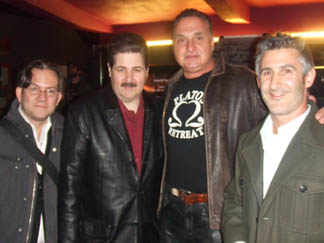
Photo L to R: STF guest host Hugo Perez, American Swing subjects Adam and Captain John and producer Matthew Kauffman
A brief surf of cable news shows and their speaking-points, sound-byte oriented talking-head experts might lead one to ask where public intellectual discourse has gone in our media saturated 21st century world. This week’s STF presentation ARGUING THE WORLD is a swansong to the golden age of New York public intellectual life through a portrait of several of its most influential participants: Daniel Bell, Nathan Glazer, Irving Howe, and neo-con godfather Irving Kristol. New York doc veterans Director Joseph Dorman and Editor Jonathan Oppenheim joined the STF audience for a discussion of the circumstances that made the City College of the 1930s the cradle of public intellectual discourse for the remainder of the 20th Century, and how the changing nature of our society and media-scape perhaps no longer allow for public intellectuals to have the prominence and influence that they once did. As is traditional, the conversation continued at STF hangout 99 Below where Dorman and Oppenheim were joined by a slew of familiar faces from the New York documentary scene: Jean Tsien, Jenni Livingston, Pola Rapaport, Martina Radwan, and others. Several hours later, fueled by good conversation and perhaps the special pear schnapps STF drink special, one left thinking that perhaps the prognosis for intellectual discourse was not as bleak as one thought.
There are a limited number of discounted tickets being made available to the STF community for the March 29 presentation of the Cinema Eye Honors. Last year, the first Cinema Eye Honors was one of the my favorite documentary events of 2008. This year’s edition promises to be even better, moving to the gorgeous Times Center in the New York Times building.
Top documentary makers and film industry leaders will gather to celebrate excellence and innovation in the nonfiction films of 2008. Awards
presenters include Laurie Anderson, Albert Maysles, D.A. Pennebaker and Morgan Spurlock. The diverse array of nominated films include MAN ON WIRE, WALTZ WITH BASHIR, and MY WINNIPEG. More than a typical awards show, the night will feature music DJ-ed by composer and musician Ion Furjanic (composer of MANDA BALA and JESUS CAMP) and other surprises.
The ticket price includes a post-ceremony reception with hors d’oevres and an open bar at the nearby venue, ARENA (135 West 41st St).
Tickets are normally priced at $75, but if you enter the access code “STF”, you’ll pay only $50. CLICK HERE TO ORDER TICKETS
GIRLS LIKE US. This is a great film from the late 90’s that I saw at Stranger than Fiction last night. Oh, how I love STF, I finally found a club that would have me as its member (this is a Marx Brothers reference, if you don’t get it, you can’t join the club!). The documentary made by a lovely lady couple, tracks 4 teenagers from the time they are 13-14 until they are 17-18. The girls, who all live in South Philly, speak candidly about sex, childbirth, their relationships with their family and friends and their goals in life. This film won Sundance back in the day and it’s easy to understand why. Like Trouble the Water it sort of magically captures those tragedies and joys of life, which are often rendered mundane, as people avert their eyes to experiences of “othered” social groups. The 4 girls, 2 white, 1 black and one South Asian all seemed to struggle to define themselves independently of their relationships with men. While, their parents and guardians strove to keep them on a track towards college and career. 3 of the women, now pushing 30, joined us at the IFC center after for a Q&A. They all seem to have turned out quite well and consider their experience being in the film to have been enriching and not exploitative.
Watching Alan Berliner’s rarely seen work on a big screen is a true treat. Last Tuesday evening began with his short EVERYWHERE AT ONCE and was followed by INTIMATE STRANGER – a film shot 18 years ago about his grandfather Joseph Cassuto. When asked by an audience member what his grandfather would have thought of the film, Berliner replied: “He died 35 years ago and we’re still talking about it. He’d love it!”
When talking about the making of INTIMATE STRANGER, Berliner said that the film “defined labor of love”. He spent 9 months simply reading his grandfather’s archives: Joseph Cassuto had meticulously saved every letter he had ever received or written (the magic of carbon copy). Berliner explains: “I must have inherited whatever genetics were necessary to cope. I had to go through every piece of paper, since you never know what you might find.” During this early research, he remembers finding five $100 bills in one of the tucked-away envelopes, which he describes as the film’s “first grant”.




 What Hugh Hefner’s Playboy Mansion and Andy Warhol’s Factory were to the international jet-set of the 1960s, Larry Levinson’s infamous sex-club Plato’s Hideaway was to working class New York in the late seventies and early eighties. Jon Hart and Matthew Kauffman’s documentary AMERICAN SWING captures the rise and fall of this truly unique New York establishment and the equally compelling story of Larry Levinson, the self-proclaimed King of Swing who founded Plato’s Hideaway as a place where middle class husbands and wives could let their hair down and swing.
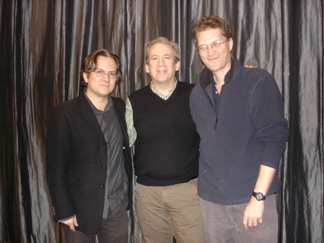 A brief surf of cable news shows and their speaking-points, sound-byte oriented talking-head experts might lead one to ask where public intellectual discourse has gone in our media saturated 21st century world. This week’s STF presentation ARGUING THE WORLD is a swansong to the golden age of New York public intellectual life through a portrait of several of its most influential participants: Daniel Bell, Nathan Glazer, Irving Howe, and neo-con godfather Irving Kristol. New York doc veterans Director Joseph Dorman and Editor Jonathan Oppenheim joined the STF audience for a discussion of the circumstances that made the City College of the 1930s the cradle of public intellectual discourse for the remainder of the 20th Century, and how the changing nature of our society and media-scape perhaps no longer allow for public intellectuals to have the prominence and influence that they once did. As is traditional, the conversation continued at STF hangout 99 Below where Dorman and Oppenheim were joined by a slew of familiar faces from the New York documentary scene: Jean Tsien, Jenni Livingston, Pola Rapaport, Martina Radwan, and others. Several hours later, fueled by good conversation and perhaps the special pear schnapps STF drink special, one left thinking that perhaps the prognosis for intellectual discourse was not as bleak as one thought.
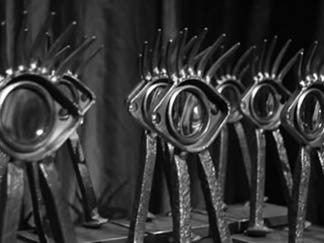 There are a limited number of discounted tickets being made available to the STF community for the March 29 presentation of the
  Text taken from
 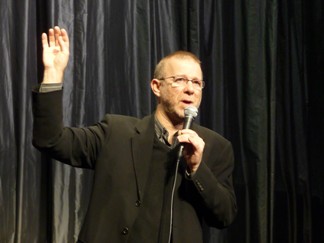 Watching Alan Berliner’s rarely seen work on a big screen is a true treat. Last Tuesday evening began with his short EVERYWHERE AT ONCE and was followed by INTIMATE STRANGER – a film shot 18 years ago about his grandfather Joseph Cassuto. When asked by an audience member what his grandfather would have thought of the film, Berliner replied: “He died 35 years ago and we’re still talking about it. He’d love it!”