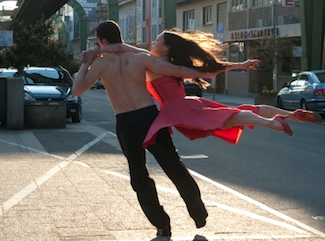
Stranger Than Fiction screens seven films co-presented with DOC NYC’s “Short List” section. See all these award contenders for FREE with the purchase of a STF Winter Season pass; or purchase tickets to individual shows.
The official Winter Season will run Jan. 31 – March 20.
Buy a Season Pass now, and get all 15 films for $100 ($80 for IFC members), free popcorn at all shows, and a free DVD from Docurama.
During its 6-year history, STF has never held a summer season until now; and I think it’s one of our best seasons ever. We kick off with a pre-season special on Thursday, June 2 with BOBBY FISCHER AGAINST THE WORLD with director Liz Garbus; followed by the official opening night on Tuesday, June 7 of the Sundance Audience Award winner SENNA about the Brazilian Formula One race car driver Ayrton Senna. The film brilliantly employs archival footage to trace the dramatic twists and turns of Senna’s career.
Overall the summer season features 10 Tuesday night films, plus 3 special screenings for a total of 13 films. We’re currently offering a season pass for the early bird rate of $99 ($75 for IFC members) that gets you all 13 films, plus free popcorn at every STF show, a free DVD from Docurama, and the ability to transfer your pass to a friend. Best of all, you never miss a sold out screening and you can bet a lot of these will sell out.
Other festival hits coming to STF include YOU’VE BEEN TRUMPED (July 7) which caused a sensation at its Hot Docs world premiere a few weeks ago. The film looks at Donald Trump’s scheme to build a golf resort on an environmentally sensitive piece of Scotland’s coast (the same setting for the fiction film LOCAL HERO). When locals rise up in protest, Trump exerts all of his power and public relations to defeat them. During the course of making the film director Anthony Baxter wound up arrested. BETTER THIS WORLD (July 26), jury prize winner at the San Francisco Film Festival, follows the case of two young protestors at the 2008 Republican convention in Minneapolis who were charged with domestic terrorism.
Another controversial title is BETWEEN TWO WORLDS (June 30) examining how the debate over Israel is causing divisions within the American Jewish community. Directors Deborah Kaufman and Alan Snitow will visit from San Francisco to discuss the film.
Among the highly lauded doc makers coming to STF this season are Marc Levin and Mark Benjamin who will present two episodes from BRICK CITY (June 14) and discuss the making of this ambitious series. Steve James, known for HOOP DREAMS and a strong Oscar contender this year for THE INTERRUPTERS, brings his deeply personal doc STEVIE (July 19) that was overlooked when its initial theatrical run coincided with the start of the Iraq war in 2003.
For a rare look at classic docs from the 1960s, don’t miss MISSION TO MALAY (July 5) made by the pioneering woman director Hope Ryden who’s previously appeared at STF with JANE; and a double feature of 16 AT WEBSTER GROVES and WEBSTER GROVES REVISITED (July 12) that Jonathan Franzen has written about as being iconic to his childhood in suburban St. Louis. Covering the other side of the tracks in St Louis, is THE PRUITT-IGOE MYTH (June 28) about a public housing project that started with great expectations and ended in infamy.
For pure summer movie pleasure, don’t miss Mexican director Carlos Hagerman visiting with BACK TO LIFE (June 21), a story of romance and shark hunts in Acapulco; and SOUL POWER (Aug 2), showcasing the legendary 1974 concert with James Brown and others in Zaire that accompanied the fight seen in WHEN WE WERE KINGS.
Don’t miss a single one. Get a season pass and spend your summer watching great films. Full line-up below.
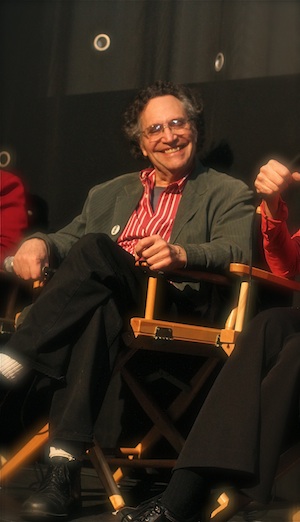
Like a photograph that accidentally captures something historical, the members of the Kartemquin Films collaborative who made The Chicago Maternity Center Story initially sought to bring to light the plight of women who would be affected by the 1974 closing of the maternity center. An affiliate of Northwestern University, the center offered a low cost, midwife-attended home-birth. But a deeper reality was that the center gave the women and their children a chance to live.
In the 1970s, minority women seemed to understand that having a baby in a Chicago hospital meant they were four times more likely to “die” in childbirth, and that their babies were two times as likely to die as their white counterparts. The film’s gentle voice-over delivers that bone-chilling reality with a calm detachment. The camera, unknown as a potential adversary at the time, communicates without mistake the hospital board members’ disregard for the fragile existence of the women.
None of the board members had the slightest concern for the women, who, without a $50 midwife option, had only a $600 local or $1200 private hospital delivery available to them. Advocating for themselves in front of the board, the women never mention the statistics. But as the film evolves it catches the moment—the exact heartbeat—when health became business first, and patient-care second.
The Chicago Maternity Center supporters starkly contrast the board members who are primarily men, old and white. In a lingering video snapshot, the administrators’ callousness leaps off the screen. Smirks and eye-rolling eventually come back to haunt board members lacking the media savvy to restrain their contempt. With every dismissive gesture captured, the disdain for the women is recorded. There, for posterity to view, administrators would learn their lesson—although too late for the center.
The Chicago Maternity Center Story is a black and white snapshot that today shows us that our healthcare system hasn’t come that far. That system is still driven by profit, and not our best interests.
This film illustrates the media-suppressed reality that giving birth at home is actually desirable. The environment has fewer germs and lacks many of the compromising variables and motives that exist in a hospital. The film includes footage of a young black woman giving birth at home with a midwife from the center in attendance. It shows a difficult birth (not for the faint hearted) that is actually rendered almost commonplace by the skill of the veteran midwife. The breech is merely a fact to be dealt with not a cause for panic. The young woman is lucid and calm once the birth of her healthy baby boy is over.
With the challenge of his birth overcome, the audience learns during Q&A he only lived 17 years in the neighborhood that wouldn’t qualify as upper-class. His mother, proud to have been a part of the film could only say, according to the filmmakers, “I was glad to have him as long as I did.”
Following the screening, STF moderated a Q&A with Kartemquin filmmakers Gordon Quinn and Suzanne Davenport, and film subject Laura Newman.
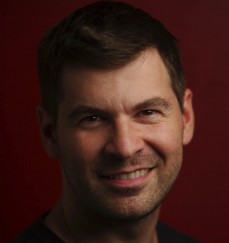
I write with shock and sadness over yesterday’s deaths of Chris Hondros and Tim Hetherington in Libya. In February, Tim showed his short film DIARY at STF and gave a thoughtful discussion afterward. We met only a few times, so others can testify to his career better than me. But I knew Chris for many years and want to add a few thoughts.
The New York Times Lens blog has published a tribute that does a fine job of getting Chris’ attributes, the way he defied the cliches of war reporting as a person. He was level-headed, neither cynical nor indulgently romantic about his profession. He took a long view of history as the son of European immigrants who had memories of WWII. He was very good with words which you can hear in his NPR interview or read in his articles. Those pieces were often written for small publications or blogs, less for career advancement than for the urge to contribute as an eyewitness. Chris had earned the security of employment at Getty Images, but he took great pleasure in side projects like setting images to music for small performances.
He was my favorite dinner companion, possessing a rare perspective on what’s happening in the world, but also a good listener. He was quick-witted. He liked teaching. He took interest in other people’s work. One of his last Facebook messages was to congratulate colleagues who had won awards.
He didn’t have the self-destructive bent that characterizes some war reporters. He could plan ahead. We were plotting an event in Toronto this June to show his Tahrir Square photos. He was going to get married in August. Outsiders might consider his whole profession foolhardy. But I think he considered it a privilege, albeit a dangerous one. He told an interviewer, “you see humanity at its worst, but to me it’s balanced by the fact that you also see humanity at its best. I’ve seen such examples of courage and human generosity.”
The urge to make sense of his death risks its own cliches of grandiosity. If Chris had a choice of where to die, I’m sure he wouldn’t have picked Misurata – a place so remote that newspapers can’t even agree on its spelling. While it may be obscure to us, for others it’s home where hundreds of Libyans have been killed in recent weeks. Chris, Tim and their colleagues were attempting to tell that story. Perhaps we don’t like the story – it doesn’t contain the right heroes or feel destined for a happy ending. But, still, there are lives at stake of people who are as dear to their families as Chris was to me. Why wouldn’t that be a story worth telling?
If you pressed Chris about the danger of his job, he’d point out that no one gets to pick where he dies. Or when. So just hunker down, do your best work and try to leave something of lasting value. That’s what he did.
Here’s how to participate:
* Visit http://www.facebook.com/DocumentaryChallenge and click “like” so more people learn about it.
* For 10 days, post your favorite films based on the following criteria to both your personal page and to the “Doc Challenge” page:
Day 1 – Favorite documentary
Day 2 – Favorite music documentary
Day 3 – Most underrated documentary
Day 4 – Best cinematography in a documentary
Day 5 – Favorite documentary character
Day 6 – Documentary that made you angry
Day 7 – Documentary that made you laugh
Day 8 – Most thrilling documentary
Day 9 – Best historical documentary
Day 10 – Best documentary you saw in the last year
You can also find these guidelines under the Doc Challenge’s “info tab”.


 Stranger Than Fiction screens seven films co-presented with DOC NYC’s “Short List” section. See all these award contenders for FREE with the purchase of a STF Winter Season pass; or purchase tickets to individual shows.
 Like a photograph that accidentally captures something historical, the members of the Kartemquin Films collaborative who made
  I write with shock and sadness over yesterday’s deaths of Chris Hondros and Tim Hetherington in Libya. In February, Tim showed his short film
  Yesterday we launched a