


STF’s First Summer Season!


image

During its 6-year history, STF has never held a summer season until now; and I think it’s one of our best seasons ever. We kick off with a pre-season special on Thursday, June 2 with BOBBY FISCHER AGAINST THE WORLD with director Liz Garbus; followed by the official opening night on Tuesday, June 7 of the Sundance Audience Award winner SENNA about the Brazilian Formula One race car driver Ayrton Senna. The film brilliantly employs archival footage to trace the dramatic twists and turns of Senna’s career.

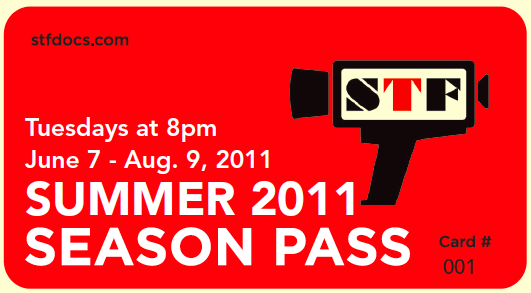
Overall the summer season features 10 Tuesday night films, plus 3 special screenings for a total of 13 films. We’re currently offering a season pass for the early bird rate of $99 ($75 for IFC members) that gets you all 13 films, plus free popcorn at every STF show, a free DVD from Docurama, and the ability to transfer your pass to a friend. Best of all, you never miss a sold out screening and you can bet a lot of these will sell out.

Other festival hits coming to STF include YOU’VE BEEN TRUMPED (July 7) which caused a sensation at its Hot Docs world premiere a few weeks ago. The film looks at Donald Trump’s scheme to build a golf resort on an environmentally sensitive piece of Scotland’s coast (the same setting for the fiction film LOCAL HERO). When locals rise up in protest, Trump exerts all of his power and public relations to defeat them. During the course of making the film director Anthony Baxter wound up arrested.  BETTER THIS WORLD (July 26), jury prize winner at the San Francisco Film Festival, follows the case of two young protestors at the 2008 Republican convention in Minneapolis who were charged with domestic terrorism.

Another controversial title is BETWEEN TWO WORLDS (June 30) examining how the debate over Israel is causing divisions within the American Jewish community. Directors Deborah Kaufman and Alan Snitow will visit from San Francisco to discuss the film. 

Among the highly lauded doc makers coming to STF this season are Marc Levin and Mark Benjamin who will present two episodes from BRICK CITY (June 14) and discuss the making of this ambitious series. Steve James, known for HOOP DREAMS and a strong Oscar contender this year for THE INTERRUPTERS, brings his deeply personal doc STEVIE (July 19) that was overlooked when its initial theatrical run coincided with the start of the Iraq war in 2003.

For a rare look at classic docs from the 1960s, don’t miss MISSION TO MALAY (July 5) made by the pioneering woman director Hope Ryden who’s previously appeared at STF with JANE; and a double feature of 16 AT WEBSTER GROVES and WEBSTER GROVES REVISITED (July 12) that Jonathan Franzen has written about as being iconic to his childhood in suburban St. Louis. Covering the other side of the tracks in St Louis, is THE PRUITT-IGOE MYTH (June 28) about a public housing project that started with great expectations and ended in infamy.

For pure summer movie pleasure, don’t miss Mexican director Carlos Hagerman visiting with BACK TO LIFE (June 21), a story of romance and shark hunts in Acapulco; and SOUL POWER (Aug 2), showcasing the legendary 1974 concert with James Brown and others in Zaire that accompanied the fight seen in WHEN WE WERE KINGS.

Don’t miss a single one. Get a season pass and spend your summer watching great films.  Full line-up below.
Continue reading…


The Panama Deception: Media’s Role in Driving the War Machine


This post was written by STF blogger Aaron Cael.

imageThe chronicle of American wars contains many smaller conflicts wedged in between the marquee names of World War II, Vietnam and Iraq. Director Barbara Trent’s film The Panama Deception reminds us that for the people being bombed, shot and terrorized by the invading war machine, there are no small wars. Using footage of explosions, charred bodies, and the leveled neighborhoods of the poor, The Panama Deception turns again and again back to the U.S. media’s sanitized version of the “intervention” that omitted everything but the U.S. government’s carefully controlled narrative. Interviews with ex-CIA analysts, investigative journalists, and Panamanians caught in the crossfire put the lie to that narrative, revealing the operation as a live-fire rehearsal for the wars of the 21st century, during which the U.S. tested new weapons on real people.
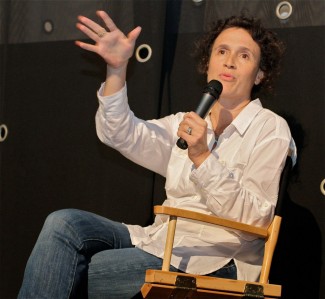
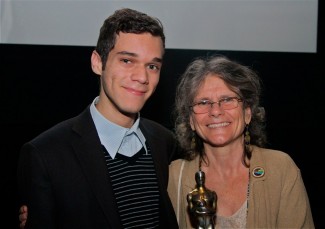
Barbara Trent was on hand, passing her Oscar statuette around, to provide the audience with context of the true goals of the Panama invasion, and to describe the fierce censorship she and her collaborators faced from an occupying force that sought to dodge the bad P.R. of collateral damage in moves that resulted in mass graves and media blackouts. Special guest Jean-Manuel Beauchamp—grandson of the invasion’s target, Panamanian President Manuel Noriega—also took questions from the audience about growing up in the aftermath of invasion and occupation, and the game of international politics that has kept his grandfather imprisoned.

[Photo: From left, Jean-Manuel Beauchamp and director Barbara Trent, courtesy of Simon Luethi]

Continue reading…


Three of Hearts: A Postmodern Family


imageThe idea of long-term polyamory seems to most often stagger its way to the American mainstream represented as a husband with multiple wives, where dynamics and hierarchies are expected to be firmly entrenched in a patriarchal structure. Three of Hearts: A Postmodern Family refreshingly avoids that trope in its examination of a male-male-female threesome. While twentysomethings living in New York City, the trio of Sam, Samantha and Steven establish a relationship that acknowledges the fluidity of human sexuality, while simultaneously thumbing their collective nose at the admittedly abstract conventions of romantic relationships. The threesome’s own struggles with the rarity of their bond are conveyed in a few telling moments, as when they trouble themselves for an appropriate nomenclature to describe what it is they’re doing (eventually resorting to the unwieldy “trinogomous”). In the end, however, the viewer learns that even these unconventional three are not immune to the bitterness that envelopes any jilted ex, as we watch the relationship collapse and the group’s members tread through moments of barely contained rage and pettiness. For anyone who’s lived through a failed relationship, that part of the story is all too familiar. Following the screening, Stranger Than Fiction Executive Director Raphaela Neihausen led a Q&A with Director Susan Kaplan. Click “Read more” below.
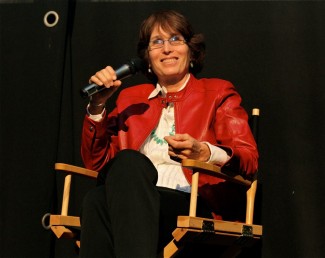
[Photo: Director Susan Kaplan, courtesy of Simon Luethi]

Continue reading…


We Still Live Here: Witnessing the Rebirth of a Language


imageThe link between language and culture is an indelible one, as is shown in Anne Makepeace’s film We Still Live Here. The film follows Mashpee Wampanoag Jesse Little Doe’s incredible efforts to resurrect the left-for-dead language of her people, despite having no formal training in linguistics. Although the Wampanoag language was thought to have lacked a fluent speaker for some 150 years, Little Doe in the early 1990s was besieged by a recurring dream in which Mashpee Indians sang to her in a language she didn’t understand. Through her efforts, she was able to realize a her own dream—one in which her daughter, Mae, became the first person raised in the Wampanoag language since the 19th century. In the ultimate irony, Little Doe and other linguists were able to use a body of texts created largely through the efforts of Christian missionaries—who effectively sought to destroy the native culture of the Wampanoag—as source material in rediscovering words that had not been spoken aloud for at least six generations, with a Wampanoag-language Bible serving as perhaps the most useful resource. Following the screening, Makepeace spoke with Stranger Than Fiction Executive Director Raphaela Neihausen. Click “Read more” below for the Q&A.
[Photo: Director Anne Makepeace, courtesy of Simon Luethi]

Continue reading…


Cul de Sac: A Suburban War Story


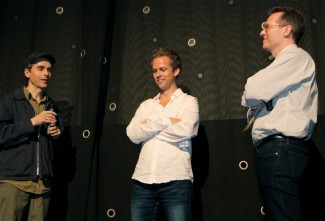
imageIn retrospect, plumber Shawn Nelson’s fatal march toward his 1995 joyride in a stolen tank, which he piloted through a series of Southern California residential neighborhoods, seems almost inexorable. In Cul de Sac: A Suburban War Story, director Garrett Scott nimbly spells out the confluence of social and historical trends that found Nelson, a former soldier and methamphetamine user, trapped in an armored vehicle on a highway at gunpoint. Police footage of Nelson’s rampage seems surreal in its absurdist juxtaposition of a tank loosed in generic suburbia, but the imagery is suffused with heavy—though unintended—symbolism. Fed on a mother’s milk of Pentagon defense contractor money, the enclave of Clairemont was only one of a number of cities that benefited from the lifting of thousands of blue collar workers into a comfortable middle class lifestyle. But when the flood of dollars ended, violence that was once exported as an industrialized good was instead left to fester in dying communities.  Cul de Sac shows us the heavy burdens borne by some of those attempting to find their way in the deindustrialized remains of the U.S.’s post World War II boom. Following the screening, Stranger Than Fiction Artistic Director Thom Powers spoke with Cul de Sac editor Ian Olds, and filmmaker Jem Cohen, who had a role in helping the film gain a viewership. Click “Read more” below for the Q&A.

Also, work was shown by recipients of the Garrett Scott Documentary Development Grant, established following Scott’s death in 2006 in order to aid first time documentary filmmakers. Lofty Nathan showed an excerpt of Twelve O’ Clock Boyz, while Katharine Fairfax Wright and Malika Zouhali-Warral showed a trailer for their film Call Me Kuchu.

[Photo: From left, Jem Cohen, Ian Olds and Thom Powers, courtesy of Simon Luethi]

Continue reading…