My awakening to Brazil’s documentary scene came when I first saw Jose Padilha’s gripping BUS 174 (pictured) at the 2003 Sundance Film Festival. Since then, I’ve seen a smattering of other Brazilian docs and heard great things about the country’s festival It’s All True named after Orson Welles’ unfinished work. My colleague Diana Sanchez who programs Latin American films for the Toronto International Film Festival suggested that I reach out to the scholar Jose Carlos Avellar, who’s written extensively on Brazilian film and literature. (If you read Portuguese, visit his website escrevercinema.com).
In answering my simple questions, Avellar opens up a robust national cinema movement full of directors who were new to me, but whose work I’m eager to explore. I’ve linked several names and titles to other resources below to encourage further exploration.
DESCRIBE THE TRADITION OF DOC MAKING IN BRAZIL
Jose Carlos Avellar: Let me exaggerate a little: the tradition of modern Brazilian cinema is documentary. It goes beyond documentary films. Documentaries created the basis for the invention of Cinema Novo and its hand held camera narrative, where the filmmaker more or less improvised action as a kind of reporter. That is why many Cinema Novo directors cross between documentary and fiction. Among the documentaries from the sixties, we can keep the ones by the late Leon Hirszman and Joaquim Pedro de Andrade (who received a retrospective at the 2007 New York Film Festival); and most of the 28 films from the series “A Condição Brasileira” produced by Thomas Farkas – for example VIRAMUNDO and VIVA CARIRI! by Geraldo Sarno; and MEMORIES OF THE CANGAÇO by Paulo Gil Soares.
The Copenhagen festival CPH: DOX, run by Tine Fischer and Tine Mosegaard, has won enthusiastic reviews. I count myself among its admirers after serving on the fest’s 2007 jury. For such a small country, Denmark has made a big impact on the world documentary scene, most recently with BURMA VJ (pictured) which racked up awards at IDFA and Sundance after its November debut at CPH: DOX.
I asked the two Tines for their take on the Danish scene…
DESCRIBE THE TRADITION OF DOCUMENTARY MAKING IN DENMARK.
Tine Fischer & Tine Mosegaard: Thanks to a fantastic and exclusively Scandinavian history of public artistic support schemes, Denmark has an old and large tradition of documentary film making that has been – and is – in constant development. Supernovas in this ongoing development have been – and still are – filmmakers Jørgen Leth and Anne Wivel with the new generation coming from the Danish Film School. Pernille Rose Gørnkjær (THE MONASTERY); Phie Ambo (FAMILY and MECHANICAL LOVE); Eva Mulvad (ENEMIES OF HAPPINESS); Asger Leth (GHOSTS OF CITE SOLEIL); Max Kestner (THE WORLD IN DENMARK); and Mikael Noer (VESTERBRO). are all names within this generation.
If there is one filmmaker and one film we would like to point out though, it would have to be Lars von Trier and THE IDIOTS. A filmmaker working with cinema, not genres, a filmmaker who thinks through his films – and a film that radically pushes and breaks with boundaries between fiction and documentary.
Every day for the next week, STFdocs will survey the globe with reports on nonfiction film making from seven countries. I started collecting these reports last summer as I was preparing for the Toronto International Film Festival. In recent years, the TIFF programming team has seen bursts of documentary activity from countries where it rarely occurred before. For example, last year TIFF showed UNWANTED WITNESS from Colombia, CITIZEN JULING from Thailand, and BLIND LOVES from Slovakia. In most cases, these films never find U.S. distribution outside of festivals. Even within festivals, they have a hard time competing against better-publicized American and European work.
To deepen my own understanding, I asked associates around the world to answer four broad questions about doc production in their countries. My intention was to publish dozens of these surveys on TIFF’s Doc Blog last summer. However, my ambitious scope overwhelmed my limited time. Now I know why this kind of information hasn’t been readily accessible before. It’s taken me this long to edit and publish them. My correspondents wrote these on a volunteer basis, following my directive to give personal opinions, rather than institutional viewpoints. They should be read in that spirit. If you want to add to the discussion, please do so in the Comments section. If you’d like to report on another country, please write to .(JavaScript must be enabled to view this email address).
Our first survey on Australia comes from Julia Overton, who serves as the Development and Investment Manager for Screen Australia. She’s assisted in the production of over 150 films of all genres. I first met her three years ago at IDFA in Amsterdam. Since then, I’ve met her annually at Hot Docs to get debriefed on upcoming Aussie docs. My TIFF colleague Jane Schoettle also makes an annual trip to Australia to monitor its rich output. Last year, Jane programmed Megan Doneman’s doc YES, MADAM, SIR about the crusading Indian policewoman Kiran Bedi.
Last night’s STF screening was a small gem known as PARALLEL LINES. Nina Davenport’s personal account of her cross country drive back to New York post 9/11 is a courageous work. She simultaneously tackles her own fears of a forever changed and emotionally damaged New York while audaciously (perhaps naively) poking around some of the forgotten corners (and people) of America with her camera.
Nina broaches some sensitive topics with complete strangers and it is amazing how quickly they share their intimate stories of loss and tragedy. In the Q&A, she admitted that there was no special tactic in convincing people to speak on camera. “I just left the camera on while engaging people in conversation. I never turned it off until we had parted.” By adopting a non judgmental position, she is able to gain great insights into these diverse lives.
As always, the conversation continued with Nina, viewers and the STF crew at its weekly watering-hole “99 Below”.
First time documentary makers living in the United States still have one week left to apply for the Garrett Scott Documentary Development grant. The initiative pays for directors to attend the Full Frame Documentary Film Festival in April to watch films, meet industry members and participate in master classes. Go to the Full Frame website for further information.



 My awakening to Brazil’s documentary scene came when I first saw Jose Padilha’s gripping BUS 174 (pictured) at the 2003 Sundance Film Festival. Since then, I’ve seen a smattering of other Brazilian docs and heard great things about the country’s festival It’s All True named after Orson Welles’ unfinished work. My colleague Diana Sanchez who programs Latin American films for the Toronto International Film Festival suggested that I reach out to the scholar Jose Carlos Avellar, who’s written extensively on Brazilian film and literature. (If you read Portuguese, visit his website escrevercinema.com).
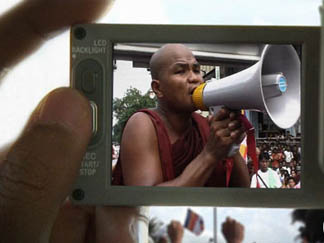 The Copenhagen festival
  Every day for the next week, STFdocs will survey the globe with reports on nonfiction film making from seven countries. I started collecting these reports last summer as I was preparing for the Toronto International Film Festival. In recent years, the TIFF programming team has seen bursts of documentary activity from countries where it rarely occurred before. For example, last year TIFF showed