The bizarre story of Asa/Ace/Forrest Carter truly hinges on the cusp of believability. The film The Reconstruction of Asa Carter traces the confusing reinvention of white supremacist and polemicist Asa “Ace” Carter into Forrest Carter, self-proclaimed storyteller of the Cherokee Nation, and author of the New Agey book “The Education of Little Tree.” In hindsight, Forrest Carter’s success as an author (he first penned the sleeper-hit novel “The Rebel Outlaw: Josey Wales”) makes sense in a twisted way. No matter what first name he was using, Carter was clearly a consummate storyteller, regardless of whether he was using his speechwriting skills to burnish Alabama politician George Wallace’s credibility as a stark racist and segregationist, or if he was selling the character of Forrest the Novelist to a smiling Barbara Walters. Some of the film’s most striking scenes consist of capturing the reactions of the friends of Forrest as they are shown clips of the vitriolic hatred he espoused in his earlier incarnation as Ace. They are understandability bewildered, seeking an explanation that only the late Carter himself has the power to provide. Following the screening, Stranger Than Fiction Artistic Director Thom Powers spoke with director Marco Ricci, producer Douglas Newman, executive producer Laura Browder and co-producer Michael Fix. Click “Read more” below for the Q&A.
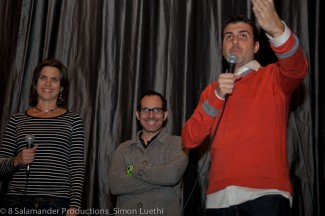
[Photo: from left, Laura Browder, Douglas Newman and Marco Ricci, courtesy of Simon Luethi]
For those who have taken many film classes, there are certain tropes that signal when a film is coming from the same audience it targets. Found footage. Voiceover that puns with the images. Autobiographical fragments piling up to a conclusion about The World or History. It’s the sort of feeling you get when you go to a poetry reading and everyone in the audience is either a poet or a poet’s significant other. This is the sort of thing that works when it works, and is a trudge when it’s got little to say, or when the balance between elements is askew. (I speak from experience here, shuddering to think of someone getting ahold of the spools of 16mm I filled up years ago with black leader and self-reference.)
Jay Rosenblatt’s short film Human Remains works. The subject—the personal habits and banal daily details of the 20th century’s autocratic rogue’s gallery—is immediately compelling. These are big name monsters, after all. Revealing that the sort of men with building sized posters of their face struggled with flatulence and eczema bends the brain a little, forcing in the uncomfortable thought that these were real humans and not grotesque exceptions. In the Q&A that followed the screening, Rosenblatt said Human Remains came about after he saw a photo of Hitler eating and was so disturbed by the thought of Hitler doing such simple, normal things that he pursued the idea into what emerged as the film. He admits that the voiceover is constructed about half from quotes, 40% from biographical facts and “about 10% I made up.” That slim bit of historical uncertainty is enough to send you to Google in search of the veracity of the missing testicle theory of dictator formation.
The Darkness of Day is preceded by the explanation that the images for this meditation on suicide were culled from films discarded by school libraries in the shift to video. Considering the graphic, spot-on nature of the raw material—scenes of death, grief, self-harm and madness—it’s hard not to picture classrooms of baby-boomers cringing at their desks watching the originals. Afraid So adapts the Jeanne Marie Beaumont poem of the same title, delivering bad news in the voice of Garrison Keillor. King of the Jews offers a guided tour through Rosenblatt’s childhood fear of Jesus.
“I started off making more conventional films with actors and writing a script,” Rosenblatt explained, but he found it stressful, especially with no budget to speak of. The editing process appealed to him, though. He made his first film from cuttings of training films he found in the dumpster at the psychiatric hospital where he worked. You could call it a reduction to the most pure strain of Eisensteinian montage, but Rosenblatt offers that his found footage style is “kind of a way of avoiding the production process.”
[Photo: From left, STF Artistic Director Thom Powers and filmmaker Jay Rosenblatt, courtesy of Simon Luethi]
Following the 1867 arrest on lunacy charges of Joshua Norton, the self-proclaimed Emperor of the United States, the Daily Alta California newspaper responded: “The Emperor Norton has never shed blood. He has robbed no one, and despoiled no country. And that, gentlemen, is a hell of a lot more than can be said for anyone else in the king line.” Jody Shapiro, the director of How to Start Your Own Country, makes a solid case in his film that these days, there are at least a few other rulers who could join Norton’s ranks. A series of profiles of those people eccentric—or brave—enough to start their own “micronations,” the film makes the implicit argument that the state ultimately derives its power from the people, in either their acquiescence or their willingness to be governed. The discussion over what grants a government its legitimacy has come front and center since Shapiro finished his film in 2010, following the revolutions of the Arab Spring/Summer. Amid that violence and turmoil, How to Start Your Own Country is a great reminder that the establishment of some countries can be peaceful, and even funny. Following the screening Stranger Than Fiction Artistic Director Thom Powers spoke with Shapiro; Erwin Strauss, the author of the book on which the film was based; producer Denis Seguin; and film subject Gregory Green. Click “Read more” below for the Q&A.
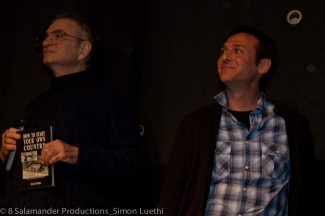
[Photo: From left, author Erwin Strauss and filmmaker Jody Shapiro, courtesy of Simon Luethi]
Although she is perhaps best known for her Oscar-nominated 2002 film Daughter From Danang, director and producer Gail Dolgin created a body of work that spanned generations and continents, comfortably combined the large issues and with the narratives of individuals. Thematically, Dolgin’s work embraces those people entrenched in an ongoing struggle to rectify the perceived injustices of the world. Raised in the suburban enclave of Great Neck in Long Island, Dolgin came of age during the socially turbulent 1960s, and her work was clearly forever shaped by the social justice issues at the fore of youth culture during that time. On Tuesday Dolgin’s family, friends and colleagues gathered to celebrate her work and her life, following her passing in October 2010 from breast cancer. A tribute to Gail edited by Ken Schneider was screened, along with excerpts from two Dolgin-directed films, Daughter from Danang and Summer of Love. Also shown in its entirety was Dolgin’s last work, the short film The Barber of Birmingham, which she directed with Robin Fryday. Afterwards, friends took the stage to share their memories of Dolgin. Click “Read more” below.
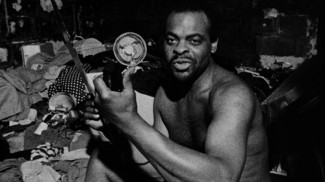
What first struck me while viewing Marc Singer’s film Dark Days are the touches that mark it as of its period—cars, the way passersby wear their hats, subtle changes in the sonic texture of the city—while the struggle of its subjects still feels very modern. If you’re broke, the future doesn’t change much. The daily grind of survival remains the same.
Survival is the main action in this film, a survey of lives lived underground in Amtrak tunnels in the mid-90s. (While the film was released in 2000, Singer says shooting finished in 1996.) The tunnel residents open their homes to the camera and discuss their home improvement projects in their shanties like any other homesteader or renovator. As above, life goes on with the locals going about chores and errands, gathering up for bull sessions about pets, past lives, security and the various hustles that keep them alive on the outside of the formal economy.
Shot on high speed black and white stock, the images are contrasty and thick grained, a style that Singer brings above-ground whenever a talking head comments on the situation, in a nice bit of image equality. These intrusions of the above-ground world are rare. Amtrak trains with their bright lights and clean lines look like interlopers when they rush through the frame. Singer mostly alternates between fly on the wall intimacy and scenes that look shot from a sniper’s distance, isolating figures at the far end of a long zoom.
Singer says he first heard of the tunnels as part of New York’s street mythology, a place that the homeless he met referred to like a den of monsters. He heard, “They eat people down there.” So
naturally, he had to check it out, soon moving into a shack down there among his eventual subjects, who he later enlisted as his crew. “I made a lot of friends and wanted to get some of them out,” he says. Having no idea how to make a film, Singer stumbled through the process with a mixture of extraordinary good luck and hard-headed perseverance. At times during editing, the money ran out and Singer was back on the street or staying on a couch with someone from the tunnels who’d made it into housing. At one point Singer walked away from $750,000 from a cable network who wanted a recut with more drugs and violence for their male 18-25 demographic. “What attracted me to [the people in the tunnel] is that they made the very best out of a bad situation. If they didn’t quit, I couldn’t quit,” he says.
Dark Days stands as the only film Marc Singer has made. After it’s initial success, he found a variety of commercial projects, but the sticking point always was being told by higher ups what sort of film he should be making. “I know what I’m good at… and I’m not good at that.”






 The bizarre story of Asa/Ace/Forrest Carter truly hinges on the cusp of believability. The film The Reconstruction of Asa Carter traces the confusing reinvention of white supremacist and polemicist Asa “Ace” Carter into Forrest Carter, self-proclaimed storyteller of the Cherokee Nation, and author of the New Agey book “The Education of Little Tree.” In hindsight, Forrest Carter’s success as an author (he first penned the sleeper-hit novel “The Rebel Outlaw: Josey Wales”) makes sense in a twisted way. No matter what first name he was using, Carter was clearly a consummate storyteller, regardless of whether he was using his speechwriting skills to burnish Alabama politician George Wallace’s credibility as a stark racist and segregationist, or if he was selling the character of Forrest the Novelist to a smiling Barbara Walters. Some of the film’s most striking scenes consist of capturing the reactions of the friends of Forrest as they are shown clips of the vitriolic hatred he espoused in his earlier incarnation as Ace. They are understandability bewildered, seeking an explanation that only the late Carter himself has the power to provide. Following the screening, Stranger Than Fiction Artistic Director Thom Powers spoke with director Marco Ricci, producer Douglas Newman, executive producer Laura Browder and co-producer Michael Fix. Click “Read more” below for the Q&A.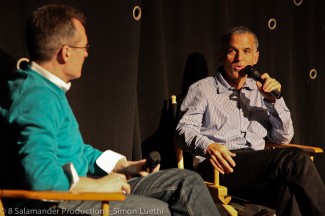
 Following the 1867 arrest on lunacy charges of Joshua Norton, the self-proclaimed Emperor of the United States, the Daily Alta California newspaper responded: “The Emperor Norton has never shed blood. He has robbed no one, and despoiled no country. And that, gentlemen, is a hell of a lot more than can be said for anyone else in the king line.” Jody Shapiro, the director of How to Start Your Own Country, makes a solid case in his film that these days, there are at least a few other rulers who could join Norton’s ranks. A series of profiles of those people eccentric—or brave—enough to start their own “micronations,” the film makes the implicit argument that the state ultimately derives its power from the people, in either their acquiescence or their willingness to be governed. The discussion over what grants a government its legitimacy has come front and center since Shapiro finished his film in 2010, following the revolutions of the Arab Spring/Summer. Amid that violence and turmoil, How to Start Your Own Country is a great reminder that the establishment of some countries can be peaceful, and even funny. Following the screening Stranger Than Fiction Artistic Director Thom Powers spoke with Shapiro; Erwin Strauss, the author of the book on which the film was based; producer Denis Seguin; and film subject Gregory Green. Click “Read more” below for the Q&A.
 Although she is perhaps best known for her Oscar-nominated 2002 film
  What first struck me while viewing Marc Singer’s film