
TO TELL THE TRUTH: The Story of the Storytellers


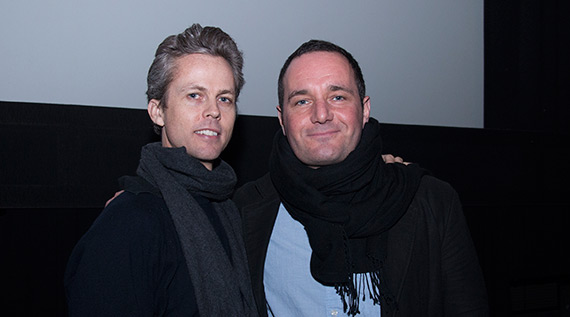
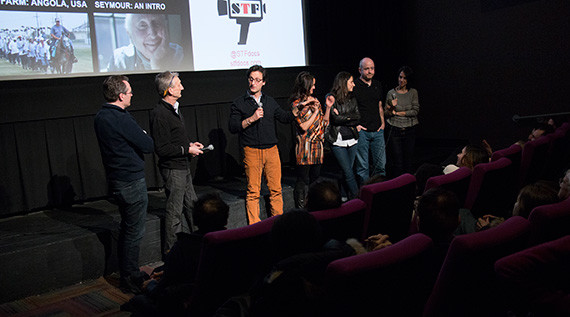
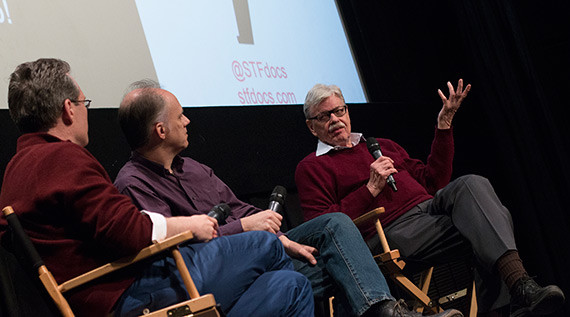
How do you trace the origins of a medium that documents history itself, and how do you reveal the roots of a genre dedicated to telling untold stories? In a screening dedicated to producer Ali Pomeroy, Stranger Than Fiction welcomed filmmakers David Van Taylor and Cal Skaggs to the IFC Center to divulge the secrets of documentary history.

TO TELL THE TRUTH: A HISTORY OF DOCUMENTARY FILM is a multi-part series that explores the social, economic and political conditions that led to the rise of, and the need for, short films about real life and real people. Episodes 2 and 3, shown on Tuesday, look to the late 1920s through 1947, formative decades that saw the genre tackle The Great Depression, labor strikes, and World War II.

In 1930, a group of renegade filmmakers founded the Workers Film and Photo League, an organization dedicated to capturing the struggles of everyday people during the harshest days of the Great Depression. Working against the precedent set by newsreel footage, which largely ignored current events in favor of flashy footage with little substance, the WFPL captured the discontent of the general public at a defining moment in American cultural and socioeconomic history.

The rise of Franklin Delano Roosevelt’s New Deal and reform-based social programs led to the production of a number of documentary films that attempted to give a narrative structure and dramatic arc to the issues facing the nation, while also drawing connections between urban poverty and rural drought and famine. Former members of the WFPL, led by writer/director Pare Lorentz, produced The Plow That Broke The Plains, released in 1936 to critical acclaim as not only a groundbreaking expose of the uncontrolled agriculture industry, but as a new method of informative, provocative filmmaking.

In the wake of Pearl Harbor and the onset of World War II, documentary film making became intertwined with political propaganda, as Nazi Germany exploited the medium with startling success. Led by Leni Riefenstahl‘s controversial yet visually striking film Triumph of the Will, which glorified Hitler’s rise to power, documentary film making became a powerful and persuasive wartime communication tool.

TO TELL THE TRUTH continues to explore the connection between propaganda and documentary, and raises important questions around whether the two are really all that different, and that the answer perhaps lies in the motivations of the filmmakers. In the Q&A following the screening, Van Taylor added that the goal of the series was to tell the story of the storytellers, and that while the genre of documentary filmmaking has grown and evolved over the years, the core values have remained the same.

“The filmmaking era we’re living in now seems so different from what [filmmakers] Ricky Leacock and Al Maysles knew, but the techniques that were pioneered here are in fact quite dominant today,” Van Taylor said. “They strive to be as visually beautiful as possible, but they all still have a propagandist intent from beginning to end.”

From military training films in the US to avant-garde portraits of coal miners and mail carriers in the UK, documentarians are charged with telling many different versions of the truth, but their biggest challenge is in how to faithfully express and expose the truth as they see it. “Filmmakers are just instruments,” Skaggs said. “We may try to find and persuade subjects and struggle to build a structure, but what we really want to do is convey what we think is true. And if we’re good, that’s what we are – pure, clear instruments.”

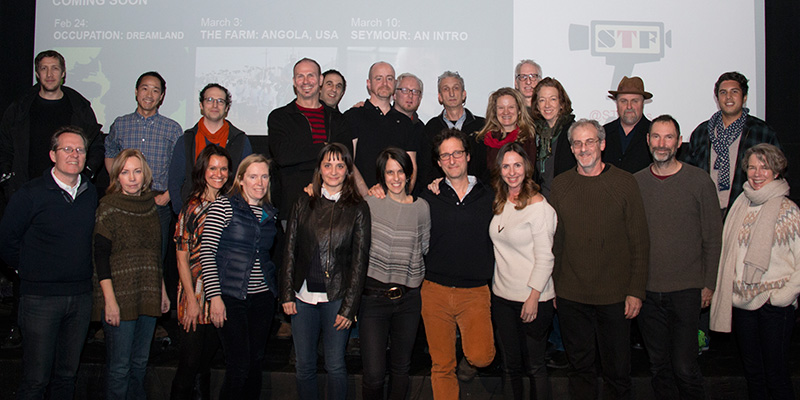
Stranger Than Fiction’s Winter 2015 season closing night is Tuesday March 24th, with THE MUSES OF ISAAC BASHEVIS SINGER. The series takes place each Tuesday night at the IFC Center. The season features an eclectic mix of sneak previews and retrospectives, including appearances by filmmakers Marc Levin, Ian Olds, Liz Garbus and film subject Seymour Bernstein.


Writing by Krystal Grow is an arts writer and photo editor based in New York. She has written for TIME LightBox, TIME.com, LIFE.com, WIRED Raw File, The New York Times Lens Blog and the DOC NYC blog. Follow her on Twitter and Instagram @kgreyscale.

Videography by Steff Sanchez, a filmmaker and designer based in New York City. Twitter @steffsanchez.

Photography by Lou Aguilar, a photographer based in New York City. Twitter @Luberta.

SEYMOUR: AN INTRODUCTION, Musician, Mentor, Sage & Poet


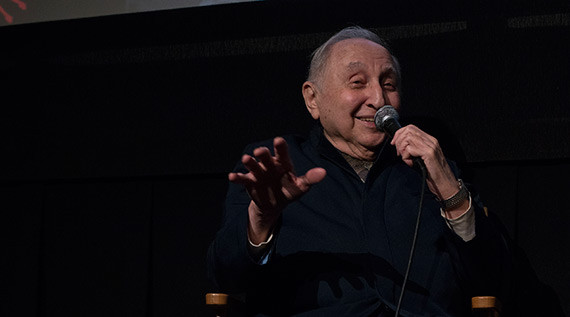
Film subject Seymour Bernstein participates in a Q&A following the screening of Ethan Hawke's directorial debut, SEYMOUR: AN INTRODUCTION.

Seymour Bernstein is a brilliant pianist who never received fame to match his talent. He rose to notability in the 1960’s, but retreated from the spotlight in 1977 to begin a career of composition and teaching to a loyal following of piano students. But in the film, SEYMOUR: AN INTRODUCTION, we learn that Bernstein is more than a musician, composer, and teacher; he is a sage and a poet.

In Tuesday’s screening of Seymour, Bernstein watched the documentary among audience members who were wooed by his soothing disposition and deep philosophical meanderings.

Actor, Ethan Hawke, met Bernstein at a dinner party of one of his pupils, and a budding friendship developed. SEYMOUR is Hawke’s documentary directorial debut, in which he paints an intimate portrait of Bernstein. There are scenes of Bernstein in his humble Upper West Side studio apartment where he has lived for almost 60 years. He converses over coffee with one of his long-time students about his early life, and he tells stories of his time served in the Korean War with tears in his eyes.

Hawke puts himself in the film, and we quickly realize that Bernstein is a mentor to him. It was Hawke who asked him to perform in a comeback recital, the first time in 37 years that he has performed publicly. Bernstein told the audience after the screening, “There’s something about Ethan; you can’t say ‘no’ to him.”

During the Q&A session, Bernstein chuckled, “Have you ever heard of someone becoming a movie star at 88 years old?” Even at this ripe age, he is still incredibly articulate, funny, and charismatic. He entertained listeners with stories of his witch-like piano teacher as a young student, and of his two favorite pianos in the world, one in Hamburg, Germany and the other in the basement of Steinway & Sons in New York City.

Above all, Bernstein’s responses made it clear that he has gained enormous fulfillment from his role as a teacher, “I’ve learned everything from my students.” And his desire to mentor feels very sincere, “I want to help my students feel good about themselves,” he said.

Bernstein ended the Q&A by stating what he feels is the point of the documentary, “The true essence of who you really are resides in your talent. You must find that talent, and take it into your life, so there is no separation between the artist and the world.”

Stranger Than Fiction’s Winter 2015 season runs from February 3rd to March 24th, taking place each Tuesday night at the IFC Center. The season features an eclectic mix of sneak previews and retrospectives, including appearances by filmmakers Marc Levin, Ian Olds, Liz Garbus and film subject Seymour Bernstein.


Writing by Maya Albanese, a New York City based multimedia reporter, writer, producer, and filmmaker covering social and environmental sustainability as well as innovation in the arts, food, and technology worlds. Maya has produced content for print, digital, and broadcast media, including The Washington Post, The Huffington Post, NBC Nightly News, The Today Show, GreenBiz.com, Fresh Cup, Coffee Talk, Heritage Radio and TellurideTV. In 2015, she is producing two documentary films and will receive a Masters degree with an emphasis in Documentary Filmmaking from Columbia University’s Graduate School of Journalism. Twitter @mayaalbanese.

Videography by Steff Sanchez, a filmmaker and designer based in New York City. Twitter @steffsanchez.

Photography by Lou Aguilar, a photographer based in New York City. Twitter @Luberta.

The Farm: Angola, USA, An Intimate Look Inside America’s Largest Maximum Security Prison


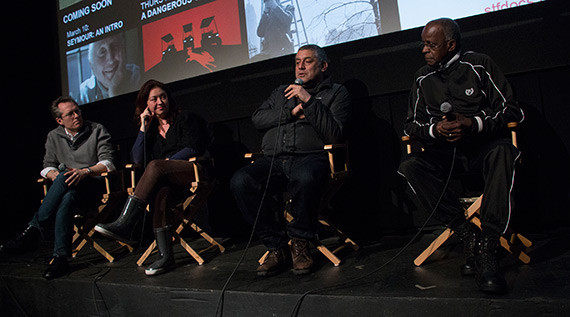
Directors Liz Garbus and Jonathan Stack discuss their film with subject Eugene 'Bishop' Tannehill, former Angola inmate pardoned after 51 years. ©Lou Aguilar

Nominated for best documentary feature at the Academy Awards in 1999, THE FARM: ANGOLA, USA is a powerful and intimate look inside America’s oldest and largest maximum-security prison. At Tuesday night’s screening, directors Jonathan Stack and Liz Garbus answered questions about their filming experience, and shed light on what drew them to the six prison inmates whose stories and struggles we follow in the documentary.

Thirty miles from the nearest town, Angola is a world in itself. A slave plantation turned into a prison at the end of the Civil War, its name is derived from the slaves who once worked its fields – most of which came from the African nation of Angola. At the start of the film, a disquieting statistic is thrown out: nearly 80 percent of those who enter will die at Angola. Furthermore, unsettlingly reminiscent of its past life as a plantation, 77 percent of the inmates at the Louisiana prison farm are African American.

One of the most impressive aspects of the documentary is the degree of access the filmmakers had. We receive an inside look at the interactions between George Crawford, a 22 year-old sentenced to life imprisonment for first-degree murder, and his brokenhearted mother. We are taken within Camp F, also known as “The Death House,” hours before John Brown, a prisoner convicted of murder and robbery, is put to death. We see the crawfish and empty Dr. Pepper cans he consumed as his last meal. We are at the bedside of Logan ‘Bones’ Theriot, a man in prison for the murder of his wife, whose escape from prison comes in the form of death from lung cancer.

“It’s not when you go, it’s how you go,” a severely underweight Theriot tells a group of prisoners who come to visit him at his deathbed in a particularly moving scene.

In the Q&A session following the screening, Stack and Garbus revealed that their access to Angola came from Wilbert Rideau, a former editor of The Angolite, the prison’s magazine. Rideau was making a film about a new warden’s first execution. When his cameraman suddenly died of a heart attack, he called up Stack.

Infatuated by Angola, Stack and Garbus decided to pursue making a long-form documentary. Stack said they looked for prisoners who could be archetypes on how to get out of prison when serving a life sentence – whether through parole, execution or death.

Also present at Tuesday night’s screening was Eugene ‘Bishop’ Tannehill, a former Angola inmate who, convicted for murder, was going on his 38th year in prison in the film. After 51 years behind prison walls, he received a pardon and now lives in Brooklyn.

“It took a miracle for me to be sitting here tonight,” Tannehill said after the film. That miracle? God.

Garbus and Stack said that one of the main takeaways they received after spending so much time at Angola was the amount of wisdom they came to find there.

“I learned so much about humanity and filmmaking,” Garbus said. “Understanding the complexity of human behavior.”

Stranger Than Fiction’s Winter 2015 season runs from February 3rd to March 24th, taking place each Tuesday night at the IFC Center. The season features an eclectic mix of sneak previews and retrospectives, including appearances by filmmakers Marc Levin, Ian Olds, Liz Garbus and film subject Seymour Bernstein.

FarmAngola-570Directors Jonathan Stack (left) and Liz Garbus (right) with Eugene ‘Bishop’ Tannehill a subject of their film and former Angola inmate who received pardon after 51 years.


Jenna Belhumeur is a current student at Columbia’s Graduate School of Journalism. After graduating from UCLA in 2013, she moved to Thailand for 8 months to teach English and backpack around Southeast Asia. After Columbia, Jenna hopes to report internationally for a major broadcast network or pursue her passion for video through long-form documentary production. Follow her on Twitter @jenna_bel and on Instagram @jennabel.

Videography by Steff Sanchez, a filmmaker and designer based in New York City. Twitter @steffsanchez.

Photography by Lou Aguilar, a photographer based in New York City. Twitter @Luberta.

OCCUPATION: DREAMLAND, A Historical Document of 2004 Fallujah


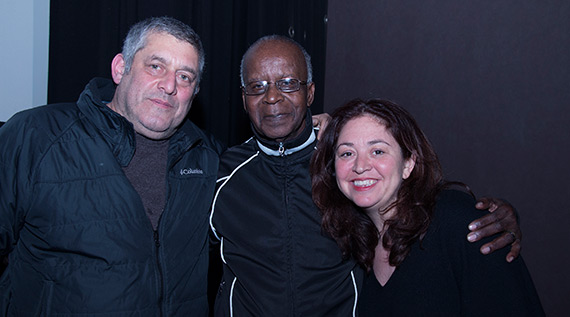
Director Ian Olds in conversation with writer Christian Parenti, a collaborator on his film OCCUPATION: DREAMLAND. ©Lou Aguilar

Dreamland was anything but an idyllic place. The former Ba’athist retreat in Fallujah, Iraq turned U.S. army camp was ripe with instability and confusion with a soundtrack of helicopter blades and explosions.

Tuesday evening’s film, OCCUPATION: DREAMLAND, paints the raw portrait of a U.S. army squad stationed at “Camp Dreamland” in January 2004. The soldiers’ dialogue reflects tediousness and boredom, interspersed with moments of confused interactions with local Iraqis and vaguely explained bursts of violence. The walls of their bungalow are lined with pictures of half nude women, and the soldiers listen to heavy metal rock music as they put on military garb and load their weapons.

At the start of the film, one soldier inquires, “I need some clarification of what we’re doing here, but I guess someone else smarter than me knows.”

The soldiers are young, some just out of high school, and they explain the reasons they enlisted, “I had no money,” and “I had no idea what to do with my life.” At the same time, they are not naïve. One soldier describes his disillusionment with the American government’s intentions in Iraq, “You put two and two together. War is money.”

Based on the editing of sound bites and scenes of fearful faces of Iraqis in their homes as U.S. troops raided them, the film appears to a have a viewpoint. Yet, what the audience experiences feels raw and unadulterated. Indeed, during the Q&A after the screening, director Ian Olds said that the soldiers depicted in the film affirmed to him that it was a truthful portrayal of what life was like at Camp Dreamland.

Olds’ co-director, Garrett Scott, died of a heart attack at age 37 just a day before OCCUPATION: DREAMLAND won the 2005 Independent Spirit Award. Olds said that this screening was the first time in many years that he had watched this film, and it reminded him of his partner he had lost.

There are a few remarkable things about this documentary. First is the filmmakers’ access, which can be partly attributed to brilliant timing. Olds explained, “At that time, things were still very unregulated. We flew to Jordan and showed up at the camp, knocked on the door, and said something like, ‘We’re making a film about the day in the life of a soldier.’”

But, the regulations were about to change. After the violent siege of Fallujah just three months later in April 2004, access for journalists altered completely.

Another notable aspect of the film is the sound design, done by Jim Dawson, which is a bombastic backdrop to the steady escalation of violence in Fallujah, which ultimately leads to death of 1,000 Iraqis and 42 U.S. marines in the city’s siege.

Olds said that he and his co-director, Scott, wanted “to make a historical document” of a moment in wartime.

Stranger Than Fiction’s Winter 2015 season runs from February 3rd to March 24th, taking place each Tuesday night at the IFC Center. The season features an eclectic mix of sneak previews and retrospectives, including appearances by filmmakers Marc Levin, Ian Olds, Liz Garbus and film subject Seymour Bernstein.

Director Ian Olds with writer and collaborator Christian Parenti following the screening of OCCUPATION: DREAMLAND at Stranger than Fiction. ©Lou AguilarDirector Ian Olds with writer and collaborator Christian Parenti following the screening of OCCUPATION: DREAMLAND at Stranger than Fiction.


Writing by Maya Albanese, a New York City based multimedia reporter, writer, producer, and filmmaker covering social and environmental sustainability as well as innovation in the arts, food, and technology worlds. Maya has produced content for print, digital, and broadcast media, including The Washington Post, The Huffington Post, NBC Nightly News, The Today Show, GreenBiz.com, Fresh Cup, Coffee Talk, Heritage Radio and TellurideTV. In 2015, she is producing two documentary films and will receive a Masters degree with an emphasis in Documentary Filmmaking from Columbia University’s Graduate School of Journalism. Twitter @mayaalbanese.

Videography by Steff Sanchez, a filmmaker and designer based in New York City. Twitter @steffsanchez.

Photography by Lou Aguilar, a photographer based in New York City. Twitter @Luberta.

BEST OF EGG THE ARTS SHOW: Scrambled Eggs with a Side of Art


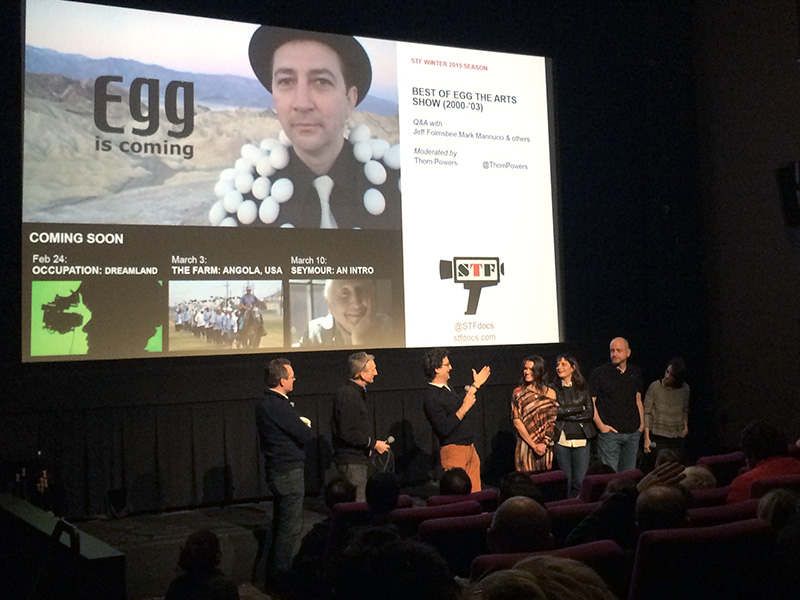
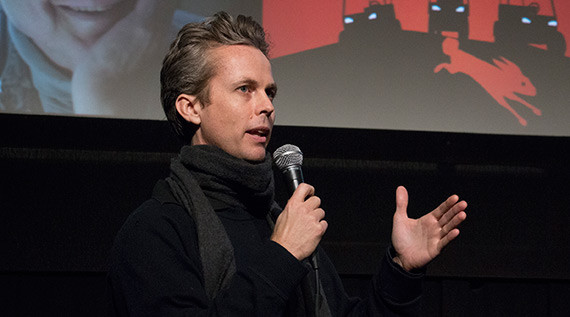
Following a one-night special showing the best of EGG THE ARTS SHOW, series producers Jeff Folmsbee and Mark Mannucci discuss the making of the unique PBS series with Beth Levison, Amy Teutenberg, Mary Recine and Tom Patterson. ©Lou Aguilar

From 2000 to 2003, EGG the Arts Show took audiences down weird and wonderful paths. Each with its specific theme, these paths coalesced around the various forms art takes within American culture and the curious characters behind its production. In Tuesday night’s screening at the IFC Center, audience members were in for a treat: The Best of EGG, a kind of scrambled medley representative of the unique and experimental PBS show.

In the Q&A following Tuesday’s screening, executive producer Jeff Folmsbee and series producer Mark Mannucci were joined onstage with other editors and producers instrumental in the television program’s genesis. Each emphasized the independent spirit behind the series’ formation.

“We had incredible creative freedom,” said Mannucci. “No one knew what they were doing.”

Folmsbee agreed that the show’s one of a kind style was a result of its creators’ willingness to experiment with the typical TV program format.

“It was like making a show that nobody else looked at.” Folmsbee said with a smile. “And we exploited that.”

The original show was 30-minutes long and composed of various stories that played off each other. Each had to have the ability to stand on its own, while also mixing in with other stories. All embodied a common theme. For those podcast listeners, think a quirky television version of This American Life.

EGG was an opportunity to "cull from the incredible New York talent pool," many of whom attended the STF Best of Egg screening.

The creators noted that for the production of “The Best of EGG,” it was difficult to capture the essence of EGG without having a hard theme to hone in on. Instead, they tried to simply include segments that illustrated high art versus art produced by unconventional, but equally passionate people throughout the country. A quick recap of the segments making up “The Best of EGG” is summarized below.

Act 1: What’s the big idea behind conceptual art? With self-portraits carved from aspirin and paintings done with paint-dipped hair, this segment honed in on artists who emphasized the idea behind their pieces over the objects utilized to actually convey that idea.

Act 2: A behind-the-scenes look at the work of Sid Laverents, an American amateur filmmaker who started making films at home at the age of 50. What began as just a hobby evolved into videos that, while eccentric, demonstrated impressive technical experimentation.

Act 3: When does something you love become something you don’t? “Giving Up the Ghost” followed photographer Sally Mann and her fascination with death.

Act 4: Never let age keep you from doing what you love. This segment highlighted a physical trainer and Alvin Ailey dancer who embody the spirit of that statement.

Act 5: Never did barbershop-singing tug at your heartstrings more than with this segment set in Harmony College. While the men come to better their craft and master the art of blending voices seamlessly, the sense of fellowship among the singers at Harmony College is this mini-doc’s main takeaway.

Act 6: A behind-the-scenes at Joe Sacco, a Maltese-American cartoonist whose series on the Bosnian War and ethnic cleansing uniquely blends the realms of serious journalism and cartoon art.

Act 7: Famed Broadway actress and singer Elaine Stritch’s one-woman show gives audiences an unfiltered look her rollercoaster life and career. The actress, who was also the voice of EGG during its series run, holds nothing back.

Act 8: This segment on Burning Man gives viewers an inside look at the creative minds and personalities behind the renowned week-long festival in Nevada’s desert. By depicting various radical takes on self-expression at the festival, this mini-doc highlights those who are no longer satisfied by just looking at art.

Stranger Than Fiction’s Winter 2015 season runs from February 3rd to March 24th, taking place each Tuesday night at the IFC Center. The season features an eclectic mix of sneak previews and retrospectives, including appearances by filmmakers Marc Levin, Ian Olds, Liz Garbus and film subject Seymour Bernstein.

Jenna Belhumeur is a current student at Columbia’s Graduate School of Journalism. After graduating from UCLA in 2013, she moved to Thailand for 8 months to teach English and backpack around Southeast Asia. After Columbia, Jenna hopes to report internationally for a major broadcast network or pursue her passion for video through long-form documentary production. Follow her on Twitter @jenna_bel and on Instagram @jennabel.

Videography by Steff Sanchez, a filmmaker and designer based in New York City.


egg-q&a-web