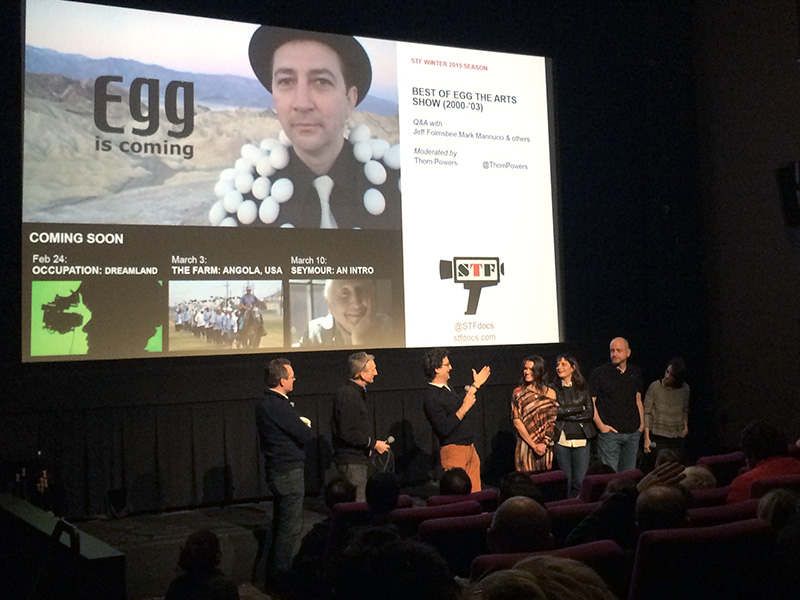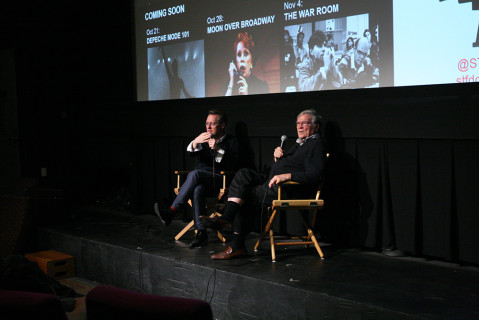
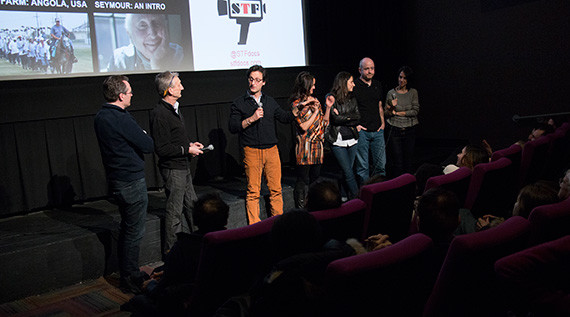
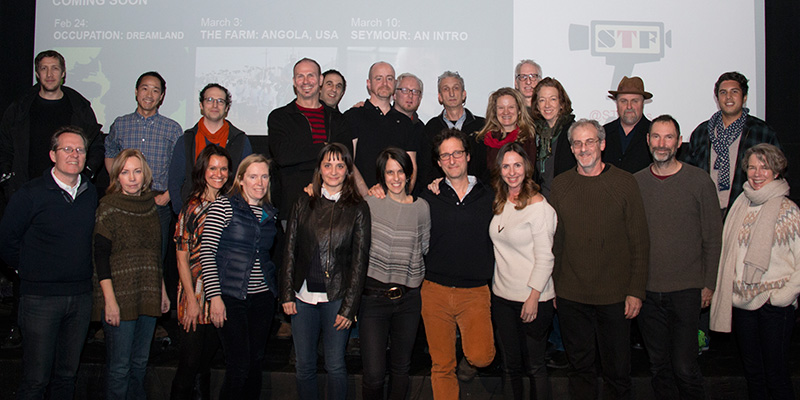
Following a one-night special showing the best of EGG THE ARTS SHOW, series producers Jeff Folmsbee and Mark Mannucci discuss the making of the unique PBS series with Beth Levison, Amy Teutenberg, Mary Recine and Tom Patterson. ©Lou Aguilar
From 2000 to 2003, EGG the Arts Show took audiences down weird and wonderful paths. Each with its specific theme, these paths coalesced around the various forms art takes within American culture and the curious characters behind its production. In Tuesday night’s screening at the IFC Center, audience members were in for a treat: The Best of EGG, a kind of scrambled medley representative of the unique and experimental PBS show.
In the Q&A following Tuesday’s screening, executive producer Jeff Folmsbee and series producer Mark Mannucci were joined onstage with other editors and producers instrumental in the television program’s genesis. Each emphasized the independent spirit behind the series’ formation.
“We had incredible creative freedom,” said Mannucci. “No one knew what they were doing.”
Folmsbee agreed that the show’s one of a kind style was a result of its creators’ willingness to experiment with the typical TV program format.
“It was like making a show that nobody else looked at.” Folmsbee said with a smile. “And we exploited that.”
The original show was 30-minutes long and composed of various stories that played off each other. Each had to have the ability to stand on its own, while also mixing in with other stories. All embodied a common theme. For those podcast listeners, think a quirky television version of This American Life.
The creators noted that for the production of “The Best of EGG,” it was difficult to capture the essence of EGG without having a hard theme to hone in on. Instead, they tried to simply include segments that illustrated high art versus art produced by unconventional, but equally passionate people throughout the country. A quick recap of the segments making up “The Best of EGG” is summarized below.
Act 1: What’s the big idea behind conceptual art? With self-portraits carved from aspirin and paintings done with paint-dipped hair, this segment honed in on artists who emphasized the idea behind their pieces over the objects utilized to actually convey that idea.
Act 2: A behind-the-scenes look at the work of Sid Laverents, an American amateur filmmaker who started making films at home at the age of 50. What began as just a hobby evolved into videos that, while eccentric, demonstrated impressive technical experimentation.
Act 3: When does something you love become something you don’t? “Giving Up the Ghost” followed photographer Sally Mann and her fascination with death.
Act 4: Never let age keep you from doing what you love. This segment highlighted a physical trainer and Alvin Ailey dancer who embody the spirit of that statement.
Act 5: Never did barbershop-singing tug at your heartstrings more than with this segment set in Harmony College. While the men come to better their craft and master the art of blending voices seamlessly, the sense of fellowship among the singers at Harmony College is this mini-doc’s main takeaway.
Act 6: A behind-the-scenes at Joe Sacco, a Maltese-American cartoonist whose series on the Bosnian War and ethnic cleansing uniquely blends the realms of serious journalism and cartoon art.
Act 7: Famed Broadway actress and singer Elaine Stritch’s one-woman show gives audiences an unfiltered look her rollercoaster life and career. The actress, who was also the voice of EGG during its series run, holds nothing back.
Act 8: This segment on Burning Man gives viewers an inside look at the creative minds and personalities behind the renowned week-long festival in Nevada’s desert. By depicting various radical takes on self-expression at the festival, this mini-doc highlights those who are no longer satisfied by just looking at art.
Stranger Than Fiction’s Winter 2015 season runs from February 3rd to March 24th, taking place each Tuesday night at the IFC Center. The season features an eclectic mix of sneak previews and retrospectives, including appearances by filmmakers Marc Levin, Ian Olds, Liz Garbus and film subject Seymour Bernstein.
Jenna Belhumeur is a current student at Columbia’s Graduate School of Journalism. After graduating from UCLA in 2013, she moved to Thailand for 8 months to teach English and backpack around Southeast Asia. After Columbia, Jenna hopes to report internationally for a major broadcast network or pursue her passion for video through long-form documentary production. Follow her on Twitter @jenna_bel and on Instagram @jennabel.
Videography by Steff Sanchez, a filmmaker and designer based in New York City.