


Capturing Stax Records’ soul and R&B legacy


This post was written by STF blogger Krystal Grow.

The legendary Stax recording studio produced some of the finest and most influential soul and R&B music of the 60s and 70s. Now all that remains is a vacant lot in Memphis, TN. There’s a tarnished sign on the sidewalk that bears tribute to the former music mecca with a list of names that reads like a roll call of soul singers, from Otis Redding to Rufus Thomas, Sam and Dave to The Bar-Kays. In 1999, with journalist Roger Friedman in tow, DA Pennebaker and Chris Hegedus set out to find these legends, and document not only their impact on the development of an entire genre of music, but to preserve their legacy.

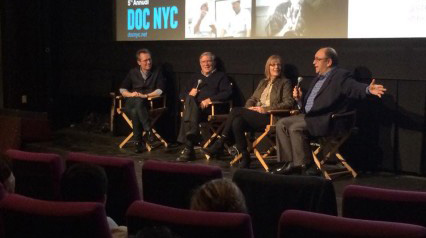
“We’ll probably never see anything like that ever again,” Pennebaker said following the screening of ONLY THE STRONG SURVIVE, the last film in Stranger Than Fiction’s eight-week tribute to the filmmaking duo. “I grew up on jazz. I had no idea this incredible music was right here in the middle of America.”

Through a series of candid interviews and observations, as well as a healthy serving of live performance footage, Pennebaker, Hegedus and Friedman follow some of the most important figures in the evolution of Memphis soul music. Standing outside the site of the former Stax studio, Carla Thomas, the ‘Princess of Soul,’ and daughter of Rufus Thomas, tells the story of her entrance into the soul scene as a teenager, singing sugar-coated songs in a girl group, and later as a solo artist. Having left her music career behind to pursue a college education, she returns to the studio to record updated versions of her most popular songs, and like they did with the cast of COMPANY and Dave Lambert, Pennebaker and his team capture all the energy of a live studio session through their unobtrusive yet intimate lens.

Outside the studio, many of the Stax legends were still performing when the film was made in 1999. From venues with revolving stages to banquet halls in small southern towns, the smoldering sound resonates with the same intensity that soul music is known for. From Wilson Pickett to Mary Wilson, Pennebaker and Hegedus reveal a resilience in these artists that has traversed profound personal tragedies and the downfall of the Stax, the epicenter of the Memphis sound.

“I wanted it to go on forever,” Pennebaker said. “It was really amazing to see these performers, whose names I knew, but who I’d never seen perform, and didn’t know were still even performing.” Hegedus agreed,”Most of these performances weren’t in the biggest venues,” she said, “but everyone really just went for it and gave it their all.”

Valerie Simpson, of the influential Ashford and Simpson songwriting/production/performing duo, was in the audience at the IFC center for the screening, and during the Q&A said that while her memories of soul music were still strong, the film itself achieved something that few people could have accomplished.

“Your love of the music allowed you to have a relationship with people that other people couldn’t have had,” she said to Friedman, who helped Hegedus and Pennebaker gain access to the subjects they followed in the film. “I loved seeing the people I love in this film in their natural state, like they really were, and that was because of you.”

Stranger Than Fiction’s twenty-fifth season featured an eight-week tribute to the careers of D A Pennebaker and Chris Hegedus.

Krystal Grow is an arts writer and photo editor based in New York. She has written for TIME LightBox, TIME.com, LIFE.com, the New York Times Lens Blog, the Magnum Foundation and the DOC NYC blog. Follow her on Twitter and Instagram @kgreyscale.
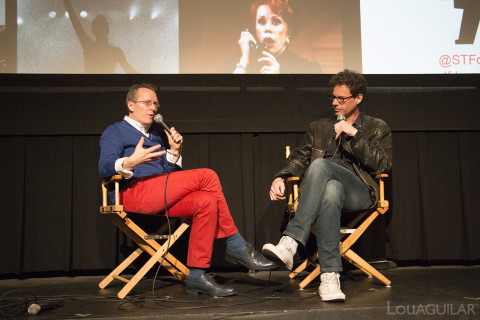
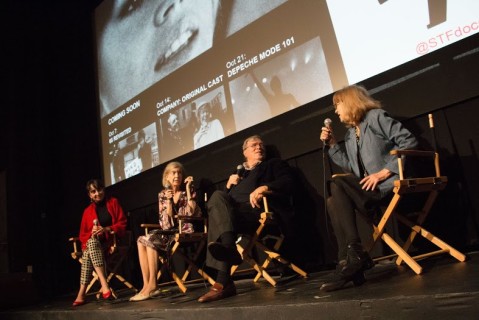
The War Room: The Clinton Campaign and The Politics of Personality


This post was written by STF blogger Krystal Grow.

Elections are always electric. In it’s worst form, political turmoil is abrasive and dangerously discouraging to potential voters. But the energy that radiates from the political process is helplessly contagious, and on this past Election Night in New York City, a crowd gathered at the IFC Center to see filmmaking team D A Pennebaker and Chris Hegedus dissect the campaign machine behind Bill Clinton’s 1992 presidential victory.

THE WAR ROOM was intended as a portrait of a candidate on his way to the Oval Office, but after Pennebaker and Hegedus unsuccessfully attempted to follow the Arkansas governor Bill Clinton, who was largely unaccessible on the campaign trail, they realized that the charisma the Clinton brought to podiums and press conferences was in abundance among the campaign staff.

Led by James Carville, the whip-smart, fast-talking southerner, and the brilliant and charming George Stephanopolous, the Clinton campaign team was a new breed of political organizers. A grassroots team that was mobilizing voters in the pre-crowd-sourcing days, Clinton staffers were endlessly enthusiastic, and determined to succeed.

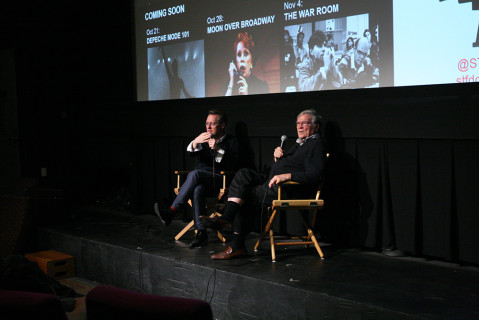
“We walked into George’s office and told him we wanted to do a film about a man becoming president, which was foolish of us, really,” Pennebaker said in the Q&A following the film. “They were after the sound bites for the six o’clock news, but George said that if James said it was ok, we could do it.”

Luckily, Carville was already a fan, having seen Pennebaker’s rarely seen 1964 film CAMPAIGN MANAGER that followed John Grenier as he orchestrated Barry Goldwater’s nomination at the Republican National Convention. After Carville OK’d the project, Pennebaker and Hegedus dove in, employing their fine-tuned vertie techniques to capture the campaign chaos and Clinton’s eventual triumph in the 1992 Presidential election.

“We didn’t go in as press,” Pennebaker said, “we just hung out and soon we became a part of it.” Following the early stages of the primaries and capturing the campaign team’s candid responses to attack ads and tabloid controversies, the duo uncover the personal triumphs behind the political machine. In one of the most moving moments of the film (of which there are many), an emotional James Carville addresses his colleagues in The War Room, the official name for wherever the Clinton campaign staff had converged, on the evening before election day. Holding back tears while others around him wept openly, Carville paid his respects to a team about to deliver the next president to the White House.

“When you see a film like this so many years on, the context changes,” Hegedus said, “but looking back, it was really an incredible campaign. We would have voted 5 times if we could have. The energy was just infectious.”

Stranger Than Fiction’s twenty-fifth season features an eight-week tribute to the careers of D A Pennebaker and Chris Hegedus.

Krystal Grow is an arts writer and photo editor based in New York. She has written for TIME LightBox, TIME.com, LIFE.com, the New York Times Lens Blog, the Magnum Foundation and the DOC NYC blog. Follow her on Twitter and Instagram @kgreyscale.


Recording Studio as Sonic Microcosm – Company: Original Cast Album and Lambert & Co.


STF Artistic Director Thom Powers in conversation with D A Pennebaker following the screening of his films COMPANY: ORIGINAL CAST ALBUM and LAMBERT & CO. © Jasmin Chang

This post was written by STF blogger Krystal Grow.

If one thing is clear from the films shown at this week’s STF screening, it’s that the recording studio is a sonic microcosm capable of distilling the most massive of sounds and the most intimate of spaces into a single, auditory experience. In the fourth installment of the weekly film series’ tribute to filmmakers D.A. Pennebaker and Chris Hegedus, we become a part of that bubble of sound, and become enraptured observers of the seemingly endless struggle to capture the perfect take.

In 1964, Dave Lambert, famous for his work with the jazz vocal trio Lambert, Hendricks and Ross, was invited to the RCA studios to record a few test tracks for a possible full length record with a new group of singers he had pulled together since he split with his former partners. Lambert was already lauded as an accomplished, even groundbreaking composer, but Pennebaker’s unwaveringly objective lens never succumbs to hero worship. In the 15 minute film, the camera hovers over Lambert and his group, who arrange themselves in a tight circle around a single mic, while session musicians and studio engineers look on and play along from their designated sound booths. LAMBERT & CO. lays down three toe-tapping numbers that never made it to the official RCA catalog, leaving Pennebaker’s short film as the only remaining evidence of the group’s major-label aspirations.

In another feat of recording-studio-cinema verite, Pennebaker, Jim Desmond and Richard Leacock document the epic, 18-hour recording session with the original cast of the huge Broadway hit, Company. The 1971 musical by Stephen Sondheim follows the trials and tribulations of a handsome bachelor and his married friends through a series of non-linear vignettes. As the cast struggles with the pressure to record the definitive version of Sondheim’s songs, the film uncovers the incredible strain these performers were under and impressive stamina and professionalism they showed through countless takes and do-overs. In the film’s crescendo, theater veteran and Broadway powerhouse Elaine Stritch belts out her show-stopping rendition of ‘Ladies Who Lunch,’ flailing her arms wildly, while her eyes maintained a steely focus on the microphone, as if she were staring down the lyrics, or glaring at an audience in a packed theater.

“I just started crying as soon as I saw her on screen,” Pennebaker said of the Stritch, who passed away in July. “She knew music, instinctively, and it just poured out of her. I always got the feeling, no matter what she was listening to, that she knew something about it. Something special, that I’d never know.”

Stranger Than Fiction’s twenty-fifth season features an eight-week tribute to the careers of D A Pennebaker and Chris Hegedus. In the week’s following, STF will show COMPANY: ORIGINAL CAST ALBUM (1970) featuring the late Elaine Stritch wrestling with Stephen Sondheim’s musical Company; DEPECHE MODE 101 (1989) following the pioneer synth/pop band across America as they end up selling out the Rose Bowl; MOON OVER BROADWAY (1998) a look behind the scenes at Carol Burnett’s return to Broadway; THE WAR ROOM (1993) on Bill Clinton’s presidential campaign, featuring George Stephanopoulos and James Carville; and ONLY THE STRONG SURVIVE(2002) a celebration of soul-music legends Sam Moore, Wilson Pickett, Isaac Hayes and others.

For the full season lineup, visit stfdocs.com/buy-tickets/

Krystal Grow is an arts writer and photo editor based in New York. She has written for TIME LightBox, the New York Times Lens Blog, Vocativ.com and the DOC NYC blog. Follow her on Twitter and Instagram @kgreyscale.


Bob Dylan and Otis Redding through D A Pennebaker’s Lens


STF Artistic Director in conversation with filmmaker John Walter following the screening of D A Pennebaker's 65 REVISITED. © Lou Aguilar

This post was written by STF blogger Krystal Grow.

The mood at Stranger than Fiction last Tuesday night felt less like a movie theater and more like a concert hall where people struggled to stay still and burst into applause after the rousing performances and rare live footage that exploded from the big screen.

In the third installment of STF’s tribute to legendary filmmaker D A Pennebaker and his groundbreaking team, viewers had the incredible opportunity to see two seminal musicians in a display of raw power and pure emotion. In SHAKE: OTIS AT MONTEREY, Pennebaker brings Otis Redding’s full 1967 Monterey Pop Festival performance to the forefront. Redding’s performance was cut to two songs in the original version of MONTEREY POP, but the full four song set at Monterey exposed an almost completely unprepared audience to a 25-year-old powerhouse of early R&B. In a shimmering, emerald green suit and backed by all-star bands Booker T. and the MG’s and The Mar-keys on horns, Redding was electric, pulsating on stage with unbridled joy and pure Memphis soul that enraptured the California crowd, ‘the love crowd,’ as Redding fondly addressed them, who responded with booming, gleeful cheers.

On the flip side of Pennebaker’s psychedelic-era-epic, STF viewers were treated to outtakes from his starkly revealing and fascinating black and white motion-picture-portrait of Bob Dylan. 65 REVISITED pulls together footage from DONT LOOK BACK, a film that, much like MONTEREY POP, completely revolutionized the concert film/music documentary genre. Dylan, already a near-mythic figure by 1965, was on tour in the UK, being followed and fawned over by everyone he encountered, coyly dodging questions and toying with expectations until the moment he walked on stage. Through Pennebaker’s lens, Dylan is like a monolith, completely alone, basked in a glaring white spotlight in the center of a massive stadium. Those performances, in front of thousands of people in concert halls across England, are jaw droopingly intense, but his back stage practice riffs and hotel room jam sessions are equally endearing in their accessibility. For all the fanfare and behind the deafening applause, Bob Dylan is actually just like every other musician. He fiddles with chord progressions and sometimes forgets lyrics. He casually tires out new songs on dusty old pianos, and occasionally stumbles on something brilliant, and Pennebaker catches it all.

 “I remember just watching DONT LOOK BACK over and over and over again, basically teaching myself how to make documentary films,”  said filmmaker and STF alum John Walter, who joined STF Artistic Director Thom Powers for the Q&A following the screening. “I love the way he’s able to work with a single camera. He almost anticipates Dylan’s movements, and has some daring to follow through.”

Walter, who directed HOW TO DRAW A BUNNY, a documentary about eccentric pop artist Ray Johnson, said he admired Pennebaker’s completist approach to filmmaking, pulling every piece of information into the frame, and allowing the scene to speak for itself. “I love that ethic, aside from the gritty, raw feel of this film, that everything is part of the frame. That everything should be included. A documentary shooter would get in trouble for that sort of thing now.”

For all the trouble Pennebaker may have caused in making these exceptional films, his influence is still broad and far reaching in the documentary world, largely due to the success of MONTEREY POP and DONT LOOK BACK, which makes these perhaps unfairly named ‘outtakes,’ so special to see. They are the raw material behind the big picture, and a rare insight into two towering figures in music history that Pennebaker and his team captured at key moments in their careers, and that we’re lucky enough to see through his lens.

Stranger Than Fiction’s twenty-fifth season features an eight-week tribute to the careers of D A Pennebaker and Chris Hegedus. In the week’s following, STF will show COMPANY: ORIGINAL CAST ALBUM (1970) featuring the late Elaine Stritch wrestling with Stephen Sondheim’s musical Company; DEPECHE MODE 101 (1989) following the pioneer synth/pop band across America as they end up selling out the Rose Bowl; MOON OVER BROADWAY (1998) a look behind the scenes at Carol Burnett’s return to Broadway; THE WAR ROOM (1993) on Bill Clinton’s presidential campaign, featuring George Stephanopoulos and James Carville; and ONLY THE STRONG SURVIVE(2002) a celebration of soul-music legends Sam Moore, Wilson Pickett, Isaac Hayes and others.

For the full season lineup, visit stfdocs.com/buy-tickets/

Krystal Grow is an arts writer and photo editor based in New York. She has written for TIME LightBox, the New York Times Lens Blog and the DOC NYC blog. Follow her on Twitter and Instagram @kgreyscale.


An evening with the filmmakers of JANE


STF Executive Director Raphaela Neihausen in conversation with filmmakers Hope Ryden, D A Pennebaker and editor Nell Cox, following the screening of JANE. © Lou Aguilar

This post was written by STF blogger Krystal Grow.

Jane Fonda- activist, fitness guru, Hollywood sweetheart, and Broadway flop. If that last one comes as a shock, it’s probably because, like so many people, you haven’t had the opportunity to see D A Pennebaker’s lovely but rarely-shown documentary JANE, which was screened last week as part of the fall season of the Stranger Than Fiction film series.

By 1962, the 25 year-old Fonda, daughter of towering Hollywood icon Henry Fonda, had already appeared in a number of films, but was feverishly rehearsing for a theater production that she hoped would establish her as a serious stage actress, an independent talent, and a viable leading woman. Pennebaker, along with a skeletal crew of fellow filmmakers, followed Fonda and the rest of the ill-fated cast of The Fun Couple, from disastrous dress rehearsals to warm-up shows in Baltimore, Philadelphia and Wilmington, right up through it’s dismal 3-show Broadway run.

“We all knew the play barked- it was no revelation,” Pennebaker said in the Q&A following the film, “but when she read [the reviews], I loved her, and I thought ‘How brave of her,’ to be filmed like that, in that moment of despair.”

In the film, Fonda is charming and demure, meticulously applying her own makeup before shows, gushing when her director-boyfriend Andreas Voutsinas would deliver her lavish gifts backstage. But she is also arrestingly vulnerable through Pennebaker’s lens, as he captures fine details and minute inferences and interactions that are actually packed with intensity and intrigue.

“Watching the film was really weird, and made me feel horrible in a lot of ways,” Pennebaker said. “She had been through some terrible moments before then, but that play flopping may have been one of the worst.”

But a bad play made for more drama off stage, and while neither Pennebaker nor his colleagues expected the production to be a total failure, they followed the story to it’s bitter end.

“We didn’t know it was going to be a flop, but when we realized it was going to be, we decided to make the best of it and be honest about what it was,” said Hope Ryden, who worked on the film with Pennebaker and joined the Q&A at the IFC Center. “If the play had been a success, the film wouldn’t have been as good, or as soulful. It wouldn’t have been the same film.”

JANE played as part of Stranger Than Fiction’s twenty-fifth season which features an eight-week tribute to the careers of D A Pennebaker and Chris Hegedus. In the week’s following, STF will show 65 REVISITED (1967) capturing another side of DONT LOOK BACK’S Bob Dylan; COMPANY: ORIGINAL CAST ALBUM (1970) featuring the late Elaine Stritch wrestling with Stephen Sondheim’s musical Company; DEPECHE MODE 101 (1989) following the pioneer synth/pop band across America as they end up selling out the Rose Bowl; MOON OVER BROADWAY (1998) a look behind the scenes at Carol Burnett’s return to Broadway; THE WAR ROOM (1993) on Bill Clinton’s presidential campaign, featuring George Stephanopoulos and James Carville; and ONLY THE STRONG SURVIVE(2002) a celebration of soul-music legends Sam Moore, Wilson Pickett, Isaac Hayes and others.

For the full season lineup, visit stfdocs.com/buy-tickets/

Krystal Grow is an arts writer and photo editor based in New York. She has written for TIME LightBox, the New York Times Lens Blog and the DOC NYC blog. Follow her on Twitter and Instagram @kgreyscale.