THESE BIRDS WALK opens on Friday, Nov. 1 at Village East Cinema in New York City.
If you’re here because you’ve heard about THESE BIRDS WALK and are trying to figure out if you want to watch it, let me save you the trouble. Just go see it. In addition to being a lovingly crafted example of an observational documentary, THESE BIRDS WALK is also a nuanced window into the lives of several people in Karachi, Pakistan, a part of the world that is too often to subjected to the sort of drive-by journalism that leaves Western audiences with a reductive and cartoonish view of the country’s people. Further, directors Omar Mullick and Bassam Tariq have delivered a much needed rebuke to journalist Nicolas Kristoff’s problematic rationale for the use of “bridge characters”–usually white or Western subjects whose presence is intended to give viewers of a similar background an empathic jumping off point for documentary work set in a world that’s unfamiliar to them.
Tariq and Mullick began their film with the intent to tell the story of the revered humanitarian figure Abdul Satar Edhi. However, Edhi’s soft resistance to documentation eventually led them to instead focus on several runaways who had sought shelter in Karachi at the Edhi Foundation, along with an ambulance driver who is compelled to help them despite his financial impulses to the contrary. I spoke with Tariq recently on audience expectations, the use of music as a tool for manipulation, and other subjects.
THESE BIRDS WALK starts a theatrical run on Friday, Nov. 1 at Village East Cinema, and Tariq and Mullick will be in attendance at all of the screenings this weekend, beginning with the one at 5:30 p.m. on Friday.
Stranger Than Fiction: You have a pretty varied background–I know you work in advertising and you’ve been a contributor to Boing Boing. You created a “transmedia” project called 30 Days/30 Mosques and another called 30 Days Ramadan. What made you want to take a more linear documentary approach to THESE BIRDS WALK?
Bassam Tariq: The funny thing is that THESE BIRDS WALK was in production or in pre-production before any of that stuff had happened. When I first came to New York I was just working in advertising. I think within a year I had the idea of making this film. The way film works–it just takes forever to get through one. You end up doing so many other things as you’re working on it. I think that’s the one thing I’ve realized, I can’t just do one thing. Some people focus on just one film, and it becomes their life. And that’s what ended up happening in post-production for us, we ended up just working on the film. But it’s very emotionally taxing as well because after you’re done with the film, if you don’t get the reception that you were looking for it’s really devastating. I think it’s hard not to have high expectations–or expectations at all–when you work on something. I think the best way to not have them is to have multiple projects going.
Continue reading…
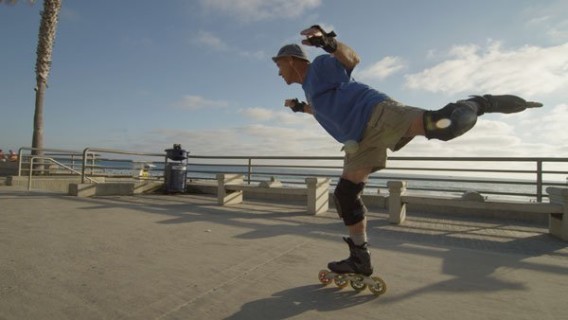
The short film SLOMO from director Josh Izenberg was one of several shorlisted for the Oscar this week.
The Academy of Motion Picture Arts and Sciences (AMPAS) this week named the short docs named to their shortlist. Mark Olsen of the Los Angeles Times covered the news, as did Jon Weisman of Variety. At Nonfics.com, Christopher Campbell had the vitals on the films on the shortlist.
Realscreen’s Adam Benzine reported on the lineup at this year’s International Documentary Film Festival Amsterdam (IDFA). Writing for DocGeeks, Alexandra Zeevalkink zeroed in on the IDFA offerings from the National Film Board of Canada. IDFA’s DocLab also announced details on the interactive titles selected for the festival,
In a thoughful piece at Nonfics.com, Christopher Campbell contemplated docs that could be construed as platforms for an evil ideology. Campbell’s piece was, at least in part, a response to a critical review of THE ACT OF KILLING from About.com writer Jennifer Merin.
This week Stranger Than Fiction is hosting a screening of Andrew Jarecki’s 2003 film CAPTURING THE FRIEDMANS on Tuesday, October 15 at 8pm at the IFC Center in Manhattan. The film follows the story of a Long Island family torn apart by accusations of child molestation. Director Andrew Jarecki will be in attendance for a Q&A following the film. For more information or to purchase tickets please go here.
Continue reading…
written by Nikki Erlick
Forty years after the enactment of Title IX, ESPN Films and espnW celebrates the landmark amendment with the documentary series Nine for IX, featuring nine documentaries – all directed by women – that explore the triumphs, challenges, and legacies of some of the world’s greatest female athletes.
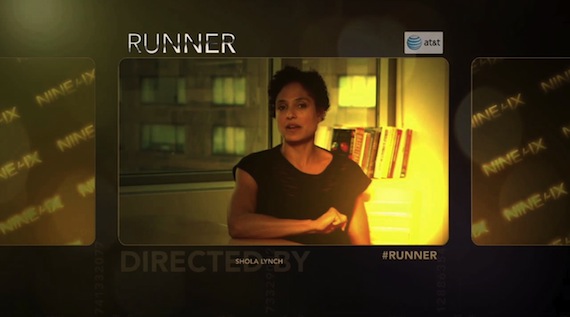
The series continues this week with RUNNER. The documentary offers a personal look at the very public successes and struggles of track star Mary Decker, whose talent, ambition, and resilience drove her to shatter world records, but whose shocking fall at the 1984 Olympics became a defining moment in her career. RUNNER revisits Decker’s astonishing rise to fame and her legendary rivalry with fellow competitor Zola Budd through interviews with the athletes and footage of the races.
Shola Lynch, the award-winning director of RUNNER, competed on an athletic scholarship in college, experiencing firsthand the benefits of Title IX. She said that when ESPN approached her to direct a film for Nine for IX, she immediately thought of Mary Decker. A competitive track runner herself, Lynch viewed Decker as “the person we all wanted to emulate,” particularly admiring her ability to outrun the strong Soviet team.
“I wanted to revisit what happened in 1984 because I remembered it from being fifteen and watching it on television,” Lynch said. “I think that what happened was unfortunate – the fall, the cry, the criticism. There is a lot of blame that can go around, but for that to be the defining moment of her career, when she has been the most dominant middle distance runner by her performance and time outside of the Olympics, is crazy. If retelling the story helps us see her in another way, then I think that’s a good thing.”
Continue reading…
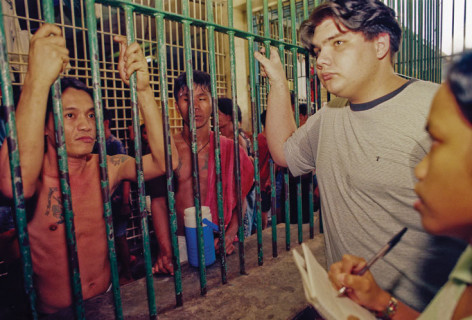
GIVE UP TOMORROW from filmmakers Michael Collins and Marty Syjuco was among the films airing on television nominated for an Emmy this year.
The National Academy of Television Arts and Sciences this week announced the nominations for this year’s news and documentary awards. Barry Walsh covered the announcement at Realscreen. ITVS’s Beyond the Box blog noted that it’s films had garnered eight nominations, while the POV blog announced it had show work snagging nine nominations.
The Sundance Institute also announced the 29 projects that would be recipients of its documentary grants this year. Nick Dawson covered the announcement for Filmmaker Magazine.
Joshua Oppenheimer’s doc THE ACT OF KILLING continues to draw attention in advance of its July 19 New York City release. At Guernica Mag, Caroline Cooper wrote a great piece on the underground network used for showing the film in Indonesia. The New York Times’ Larry Rohter also wrote a piece on the making of the film, while Errol Morris penned a piece on the film and the history of mass killings in Indonesia for Slate. The New Statesman even hosted a piece from Slavoj Zizek on the film.
Continue reading…
Here are my doc Tweets of the week:
Continue reading…