





 |
BROOKLYN CASTLE directed by Katie Dellamaggiore |
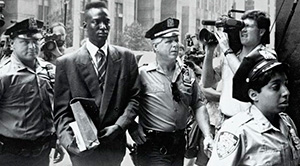 |
THE CENTRAL PARK FIVE Directed by David McMahon, Ken Burns and Sarah Burns |
 |
ESCAPE FIRE: THE FIGHT TO RESCUE AMERICAN HEALTHCARE directed by Matthew Heineman and Susan Froemke |
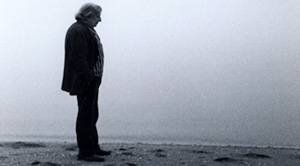 |
FIRST COUSIN ONCE REMOVED directed by Alan Berliner |
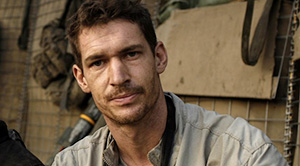 |
WHICH WAY IS THE FRONT LINE FROM HERE? The Life and Time of Tim Hetherington directed by Sebastian Junger |
Monday Memo: More Oscar Rule Changes in Store for Filmmakers
This week the Academy of Motion Picture Arts and Sciences announced yet more changes to the documentary branch.
This week Pete Hammond of Deadline reported that rule changes to the documentary category of the Oscars were results of an effort to pare down the number of films eligible for the awards.
Writing for Indiewire, Anthony Kaufman reported on the rise of VOD for docs with the concurrent decline of box office receipts. In a related piece, Indiewire’s Eric Kohn took a look at the VOD-friendly distribution strategy used by the action narrative film SNOWPIERCER.
At Filmmaker Magazine, Michael Murie provided a roundup of new developments in non-linear editing systems.
The True/False fest blog posted a panel from its latest iteration, this one on the topic “Beyond Pretty Pictures.”
Writing for The Dissolve, Jason Guerrasio interviewed director Steve James about his latest film, LIFE ITSELF.
At his What (Not) to Doc blog, Basil Tsiokos provided an overview of docs screening at the Outfest Film Festival, as well as those offered at the Jerusalem Film Festival.
The POV blog announced that the show had selected a new digital technology fellow in Brian Chirls. Also on the POV blog, Emma Dessau shared some advice for filmmakers considering using cloud storage services as a tool for collaboration.
Writing for Realscreen, Adam Benzine shared a report on the archival footage-dependent film LET THE FIRE BURN by director Jason Osder. Realscreen colleague Manori Ravindran examined the interactive doc FORT MCMONEY and the use of transmedia by a variety of doc producers.
At the International Documentary Association (IDA) website, Corinne Gaston shared five tips for digital distribution by filmmakers. Gaston also threw in a distribution terminology guide for digital DIY distro newcomers. Also at the site, Katharine Relth wrote about the breadth of films offered by the Los Angeles Film Festival, while Thomas White also shared his thoughts on the festival’s lineup
Daniel Walber of Nonfics.com penned a review of the film AIM HIGH IN CREATION! from director Anna Broinowski about fracking and the propaganda style of North Korea (yes, you read that correctly). Walber also shared a piece on a few docs screening at this year’s Japan Cuts, a film series put on by the Japan Society.
Back at the IDA site, Ron Deutsch took a look at the film GETTING BACK TO ABNORMAL about post-Katrina New Orleans, a film screening on POV tonight. Also at the site, Madelyn Grace Most recapped the international doc marketplace Sunny Side of the Doc. Finally, Amanda Lin Costa explored the new opportunities offered for documentary filmmakers by online publications.
Also at Nonfics.com, Christopher Campbell provided coverage of the nominations for primetime Emmy awards, whose ranks included the film THE SQUARE. In a separate post, Campbell made a solid case for why documentary filmmakers should not care about the Oscars.
The International Documentary Film Festival Amsterdam (IDFA) this week announced the 19 new project recipients of its Bertha Fund.
At Indiewire, Sam Adams reacted to a proposed plan by Participant Media to track the ability of docs to inspire change in viewers
Writing for his blog, Zak Forsman shared the first part of his DIY DCP tutorial.
Finally, Simon Parkin of Technology Review reported that virtual reality might yield a reimagining of documentary journalism.
Monday Memo: Life Itself Reaches Theaters
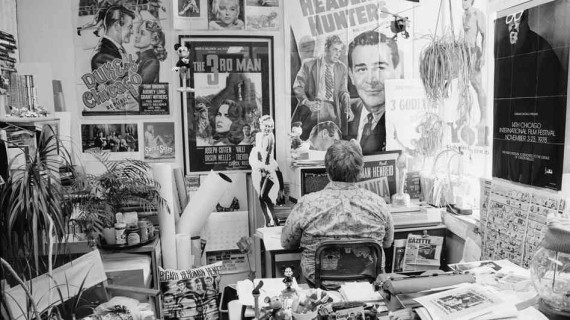
This week the Steve James-helmed film LIFE ITSELF about the late film critic Roger Ebert reached theaters.
This week the Steve James-directed doc LIFE ITSELF about the late film critic Roger Ebert hit theaters. In a post for the Chicago Reader, Ben Sachs interviewed Steve James; Eric Kohn of Indiewire did the same. At the Chicago Sun-Times, Mike Thomas also spoke with James. Adam Schartoff dedicated an entire episode of his Filmwax Radio podcast to speaking with James. Writing for Nonfics.com, Christopher Campbell gave the film five stars and called it “a perfect biography of Roger Ebert.” Back at Indiewire, Sam Adams rounded up some highlights from a Reddit AMA held by James and Ebert’s partner Chaz Ebert. At RogerEbert.com, Odie Henderson had another interview with James, as did Brandon Harris of Filmmaker Magazine. At the Sundance Institute’s website, James spoke with Nate von Zumwalt about the importance of film preservation. And at Ascap.com, Etan Rosenbloom spoke with LIFE ITSELF composer Joshua Abrams.
Premium cable network HBO announced that it would set aside Monday nights for doc airings. At Realscreen, Kevin Ritchie covered the news, as did Jessica Rawden of CinemaBlend. Rick Kissel at Variety also covered the development.
For Indiewire, Paula Bernstein spoke with documentary filmmaker Doug Block about why he was not as insistent on theatrical distribution for his latest film 112 WEDDINGS. Block also sat down for an interview with Jordan M. Smith of Ion Cinema.
Monday Memo: Filmmaker Robert Gardner Passes Away
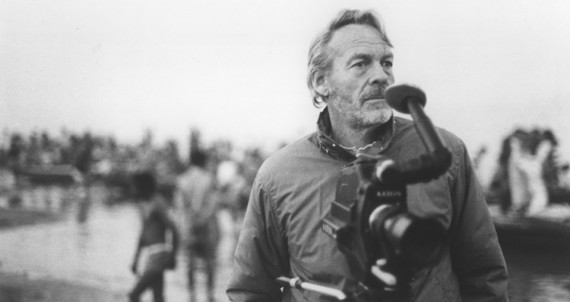
This week news broke that the documentary world had lost filmmaker Robert Gardner.
This week news broke that filmmaker Robert Gardner had passed away on June 21 at the age of 88. At the New York Times, Bruce Weber penned an obit of Gardner. The Documentary Educational Resources website also posted a note about Gardner.
Writing for the Washington Post, Anne Hornaday recapped some of the highlights from this year’s AFI Docs festival. At Realscreen, Manori Ravindran reported that HONEST LIAR from filmmakers Justin Weinstein and Tyler Measom had won the festival’s audience award. The Week’s Scott Meslow shared a list of five docs screening at AFI Docs that could not be missed. And Patricia Aufderheide provided thoughts on the social issue docs that shined in Silver Spring at the Center for Media & Social Impact (CMSI) website.
The Academy of Motion Pictures and Sciences (AMPAS) announced its new invitees; at Realscreen Adam Benzine reported on the documentary filmmakers among the group. Jonathan Sullivan did the same for Nonfics.com.
Q&A: Barry Avrich on Lew Wasserman, THE LAST MOGUL
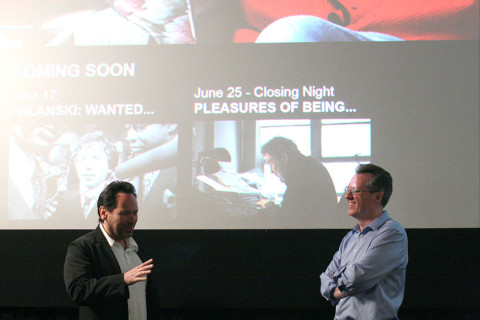
Filmmaker Barry Avrich answers audience questions following the STF screening of his film about Hollywood mogul Lew Wasserman. © Jasmin Chang
This post was written by STF blogger Krystal Grow.
There was a time when movies were made by men with relentless energy and a uncompromising quest for greatness who made some of the biggest films in Hollywood history possible, and changed the landscape of how major motion pictures were made forever.
Lew Wasserman grew up on the “rat infested” east side of Cleveland and got his start in show business in speakeasies and brothels in the 1920s, where he became good friends with rising stars and influential mobsters. In 1936, he became a publicist for MCA, then a musical booking agency with intricate ties to the Chicago mob. By 1938, MCA was managing 90 percent of the Chicago’s nightlife talent.
Over the next four decades, Wasserman transformed MCA from a one-trick booking agency to a multi-platform conglomerate, producing radio shows and motion pictures, and later spearheading the company’s foray into television, a move many other entertainment agencies and media companies were reluctant to make. But Wasserman, now a power player in Hollywood with a roster of influential friends, executed a strategy that allowed him and his company to dominate a fledgling medium, producing shows like Alfred Hitchcock Presents, Amos and Andy, Dragnet, Wagon Train and The Jack Benny Program.
He also pioneered the TV mini-series, an innovation that further solidified his role as a force to be reckoned with in the increasingly competitive world of movies and television. In a deal that was unheard of for it’s time, he brokered the purchase of Paramount Pictures’ entire pre-1950s archive, which he ran in syndication, another first for the last great Hollywood mogul.
As famous for his commanding demeanor as he was for his resistance to accolades and public appearances, Wasserman captivated director Barry Avrich to follow his career for much of his life. Avrich committed to the idea of making a film about his legendary status among Hollywood high rollers.
“I was one of those nerdy kids reading Variety from age eight, so I followed him and I watched him and I was amazed at him and the entirety of his career. I knew that this was going to be a complex film to make about six decades of power,” Avrich said in a Q&A following the screening of the film at the Stranger than Fiction series at the IFC Center. A revealing look into the man behind mega hits like JAWS, THE STING and AMERICAN GRAFFITI, THE LAST MOGUL is a film as much about an individual career as it is about an entire industry, one that’s seen drastic change at the hands of technology, consumer culture and the constantly evolving Hollywood studio system. It’s a chronicle of one man’s unprecedented rise to power, and a shocking and complicated series of missteps and bad deals that led to his demise. But the legend he left in his wake shaped the way Hollywood as a whole functioned, and left generations of would-be moguls still struggling to achieve even a fraction of his greatness.
FULL Q&A
Thom Powers: What got you started on making a film about Lew Wasserman?
Barry Avrich: I met Lew and I told him I wanted to make a film about him and he said, ‘It’ll never happen whether I’m alive or dead.’
Powers: What did you know about Wasserman that made you want to know more about his career?
Avrich: I was one of those nerdy kids reading Variety from age 8, so I followed him and I watched him and I was amazed at him and the entirety of his career. I knew that this was going to be a complex film to make six decades of power. And the Wasserman family came after me big time. I’d have interviews scheduled with major power players and [the family] would make phone calls and say, “No, you’re not going to participate in that film” and then I’d have doors slammed in my face, and in studios setting up. I was followed. I was threatened.
Powers: But for all that you have some incredible power players, Jack Valenti, President Jimmy Carter, big producers…