FREEWAY: The CIA, the Iran Contra affair, crack in Los Angeles and a man named Freeway Rick Ross


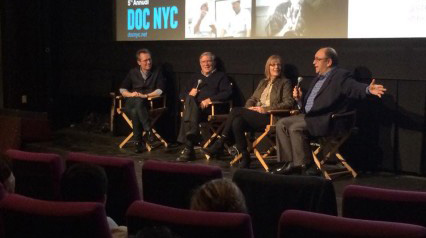
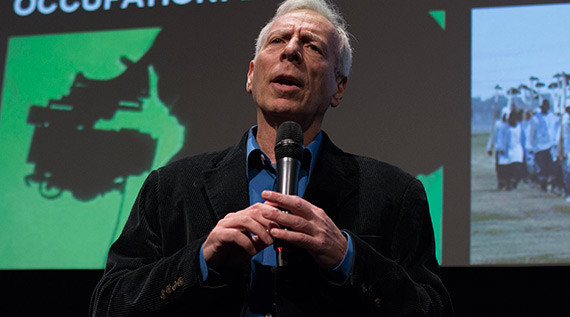
Director Marc Levin explains the 20+ year story of how he came to make the film, FREEWAY: CRACK IN THE SYSTEM. ©Lou Aguilar

This post was written by STF blogger Jenna Belhumeur.

Freeway Rick Ross’s job in south-central Los Angeles in the 1980s was to get as many people high as he could. However, the crack he sold had a much bigger story behind it, linking Ross to the CIA and the Nicaraguan Contra rebels.

In Tuesday night’s screening of FREEWAY: CRACK IN THE SYSTEM, audience members were introduced to Ross’s childhood, his booming drug empire, his demise, his redemption and a side story outlining his lawsuit with the famous rapper who shares his name. Getting involved with drug dealing early on in order to make a name for himself within a tough inner-city environment, Ross’s struggle to reclaim his name from the famed rapper by the film’s end seems fitting enough.

Following the screening, director and producer Marc Levin explained how he was first introduced to the idea about making a film exposing the U.S. government’s involvement in Los Angeles’s booming crack scene.

A media producer for Bill Moyers during the Iran-Contra affair hearings in the mid-80’s, Levin remembers hearing the chant, “CIA! Crack in America!” After meeting Gary Webb, the investigative reporter whose series of stories first examined the crack-cocaine trade’s links to members of the anti-government Contra rebels, he learned about Freeway Rick Ross.

Levin was eager to make a film about Ross, but there was one thing standing in the way: Ross’s life-in-prison sentence after purchasing 100 kilograms of cocaine from a federal agent in a sting operation.

“He was confident he was going to get out,” Levin said, while also admitting his own doubt in Ross’s capability of reducing the sentence.

However, against all odds, Ross’s case was brought to a federal court of appeals and his sentence was reduced to 20 years. In 2009, Levine received a call.

“Get your ass to L.A.,” Ross told him. “We’re going to make that movie.”

Levin explained how FREEWAY: CRACK IN THE SYSTEM is not only the story of a man who quite literally “finds the free way” during his path towards liberation, but also gives audiences a glimpse into how the system really works.
Some black men are still serving excessively long sentences in prison for minute possessions of cocaine in the 80’s which Levin describes as both a “tragedy and a travesty.”

“Part of the passion for wanting to [make this film] is because we are at a tipping point on the war on drugs and criminal justice reform,” Levin said. “It’s critical that as the #BlackLivesMatter movement continues, we understand what this injustice is rooted in.”

FREEWAY: CRACK IN THE SYSTEM will premiere in two parts on March 1st and March 8th on Al-Jazeera America.

Stranger Than Fiction’s Winter 2015 season runs from February 3rd to March 24th, taking place each Tuesday night at the IFC Center. The season features an eclectic mix of sneak previews and retrospectives, including appearances by filmmakers Marc Levin, Ian Olds, Liz Garbus and film subject Seymour Bernstein.

Jenna Belhumeur is a current student at Columbia’s Graduate School of Journalism. After graduating from UCLA in 2013, she moved to Thailand for 8 months to teach English and backpack around Southeast Asia. After Columbia, Jenna hopes to report internationally for a major broadcast network or pursue her passion for video through long-form documentary production. Follow her on Twitter @jenna_bel and on Instagram @jennabel.

Videography by Steff Sanchez, a filmmaker and designer based in New York City.

THE HAND THAT FEEDS: NYC Sandwich Makers vs. Restaurant Management


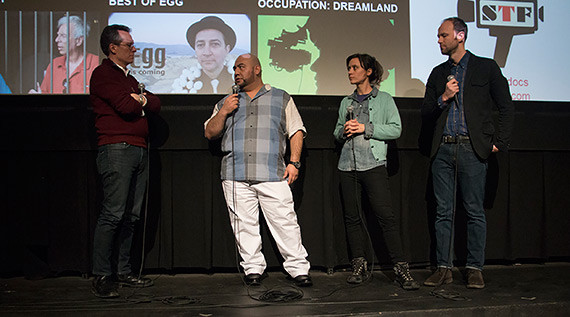
Directors Rachel Lears and Robin Blotnick discuss THE HAND THAT FEEDS with film subject and activist Mahoma Lopez. ©Lou Aguilar

This post was written by STF blogger Jenna Belhumeur.

The knight in shining armor? A local sandwich maker. The dragon? Restaurant management. The princess trapped in the castle, i.e. the ultimate goal? Basic workers’ rights.

Winner of DOC NYC’s SundanceNow Audience Award and shown as a part of the Stranger Than Fiction documentary series, The Hand That Feeds opens with a simple scene: a worker counting a stack of bills, the fruits of his labor. “$290 for 60 hours,” he says in Spanish.

In a classic underdog tale, Robin Blotnick and Rachel Lears’ documentary follows Mahoma Lopez as he, alongside his undocumented immigrant coworkers, adopts the activist mentality to fight against unjust working conditions at a popular deli in New York’s Upper East Side.

“If they don’t respond to our demands, we’ll escalate,” Lopez articulates in Spanish.

Lopez’s demands are simple: minimum wage, overtime, vacation days, safe working conditions and respect from managers known to fire employees for calling in sick. While immigrants are less likely to complain about working conditions for obvious reasons, Lopez decides to expose himself as an illegal immigrant to speak up on the issues faced by not only those at Hot & Crusty, but low-wage workers across all industries.

“You have to accept the reality and take the risk,” Lopez said following Tuesday night’s screening. “We need to show the issues immigrants are having.”

Lopez teams up with the Laundry Workers Center, a young lawyer, and even a group of Occupy Wall Street protesters to go against all odds and form an independent labor union, his key to legally demanding benefits.

In the Q&A session following the film’s screening, the directors stated their hope that the film provide a kind of organizing power for other workers in low-income jobs.

While the directors admitted that the chances of a fast-food restaurant actually forming an independent union and obtaining their first contract successfully is pretty unusual, they hope people takeaway from the documentary the importance of community support in these kind of campaigns. They’ve even started a Kickstarter campaign with the hopes that the film’s dramatic take on important issues like immigration, economic inequality, and rising social unrest can be widely shared in theaters and communities throughout the United States.

Today, Lopez still works at the deli on 63rd Street and 2nd Avenue, though under much better conditions. And how has the experience of having a documentary made about him affected his own life?

Lopez smiles at the question.

“Right now I’m not only a deli man at Hot & Crusty, I’m a labor-organizer,” he says.

Stranger Than Fiction’s Winter 2015 season runs from February 3rd to March 24th, taking place each Tuesday night at the IFC Center. The season features an eclectic mix of sneak previews and retrospectives, including appearances by filmmakers Marc Levin, Ian Olds, Liz Garbus and film subject Seymour Bernstein.

Jenna Belhumeur is a current student at Columbia’s Graduate School of Journalism. After graduating from UCLA in 2013, she moved to Thailand for 8 months to teach English and backpack around Southeast Asia. After Columbia, Jenna hopes to report internationally for a major broadcast network or pursue her passion for video through long-form documentary production. Follow her on Twitter @jenna_bel and on Instagram @jennabel.

Videography by Steff Sanchez, a filmmaker and designer based in New York City.

A Look Back at 2014 and Forward to 2015: An Interview with Thom Powers


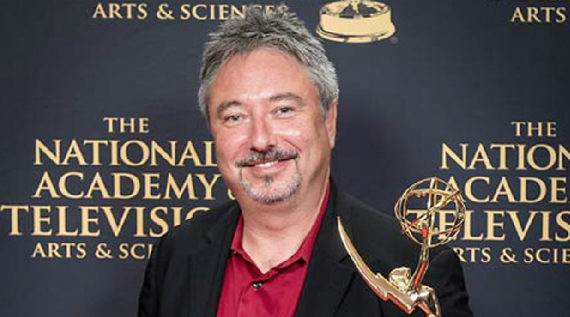
Here’s my annual chat with Thom Powers—documentary programmer at the Toronto International Film Festival (TIFF) and SundanceNOW Doc Club, and artistic director of DOC NYC and the Stranger Than Fiction series—about the big documentary stories of 2014, and what we have to look forward to in 2015. Click here for our conversation from last year.

Rahul Chadha: What do you think was the one most important development in the doc world in 2014?

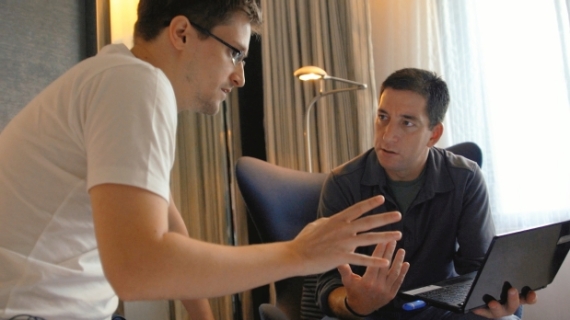
Thom Powers: I think the biggest thing that happened was the release of CITIZENFOUR. I can’t think of another documentary that has had as much far ranging impact as that film. Not just the release of the film, but also the work that Laura Poitras did leading up to it, dating back to the initial revelation of Edward Snowden in 2013.

Chadha: When I was thinking about the big doc stories of this year, the two docs I thought about were CITIZENFOUR and BLACKFISH, just because I feel BLACKFISH is the rare film in which the “impact” it’s had is easily quantifiable—there’s been a lot of reporting on how terribly SeaWorld is doing now, and it’s always attributed to BLACKFISH.

Powers: In that respect, I’d also point to THE INVISIBLE WAR, Kirby Dick’s film, which is repeatedly invoked by politicians trying to pass legislation around sexual assaults in the military. I’ll be very interested to see the follow-up to the film, THE HUNTING GROUND, that’s going to be premiering at the Sundance Film Festival. To your point, I think it does reflect a degree to which documentaries are playing a critical role at the center of culture.

Chadha: This year DOC NYC scheduled a whole day of panels dedicated to short content. We talked a little about short content last year, I was wondering if you could update your ideas about the topic.

Powers: I think it’s a growing area. A key player has been The New York Times, with their Op-Docs section that serves as a forum for independent filmmakers. But the regular New York Times video team produces short form video content of a high caliber every week. In the last year ESPN has expanded its short content. At the 2014 TIFF Doc Conference in September we had speakers from both of those companies—Jason Spingarn-Koff from the New York Times Op-Docs and Dan Silver from ESPN, and also an emerging player, Jed Weintrob, who oversees short form content for Conde Nast publications. In December, Conde Nast got a position on Apple TV under the banner “The Scene,” where that short form content is being platformed. That’s to say nothing of all the short form content that’s on platforms like YouTube and Vimeo. What’s significant here is that five years ago, for a doc maker to produce a short film, there were very few outlets. HBO has a special knack for acquiring Oscar nominated shorts. But there weren’t too many other places to get your money back. Now, there are a lot more opportunities to get paid to do a short. And you see a lot of filmmakers repurposing some of their content from feature-length films into a short form.

Chadha: One of the interesting things about all of the outlets you mentioned is that they’re cross-media platforms—the Times and Conde Nast come out of the print world and ESPN and Al Jazeera America have cable TV outlets. They’re analogues to a traditional distributor—a large part of what they bring is marketing heft.

Powers: The New York Times, ESPN, Conde Nast and HBO for that matter, are all brands  that have millions of eyeballs being driven to them naturally. It’s a different thing all together to place content on those sites as opposed to on a filmmakers own website.

Chadha: Sundance documentary head Tabitha Jackson gave a speech at DOC NYC this year calling for the strengthening of the artistic bent of documentary film that was widely discussed. What did you make of her speech? Continue reading…


Capturing Stax Records’ soul and R&B legacy


This post was written by STF blogger Krystal Grow.

The legendary Stax recording studio produced some of the finest and most influential soul and R&B music of the 60s and 70s. Now all that remains is a vacant lot in Memphis, TN. There’s a tarnished sign on the sidewalk that bears tribute to the former music mecca with a list of names that reads like a roll call of soul singers, from Otis Redding to Rufus Thomas, Sam and Dave to The Bar-Kays. In 1999, with journalist Roger Friedman in tow, DA Pennebaker and Chris Hegedus set out to find these legends, and document not only their impact on the development of an entire genre of music, but to preserve their legacy.

“We’ll probably never see anything like that ever again,” Pennebaker said following the screening of ONLY THE STRONG SURVIVE, the last film in Stranger Than Fiction’s eight-week tribute to the filmmaking duo. “I grew up on jazz. I had no idea this incredible music was right here in the middle of America.”

Through a series of candid interviews and observations, as well as a healthy serving of live performance footage, Pennebaker, Hegedus and Friedman follow some of the most important figures in the evolution of Memphis soul music. Standing outside the site of the former Stax studio, Carla Thomas, the ‘Princess of Soul,’ and daughter of Rufus Thomas, tells the story of her entrance into the soul scene as a teenager, singing sugar-coated songs in a girl group, and later as a solo artist. Having left her music career behind to pursue a college education, she returns to the studio to record updated versions of her most popular songs, and like they did with the cast of COMPANY and Dave Lambert, Pennebaker and his team capture all the energy of a live studio session through their unobtrusive yet intimate lens.

Outside the studio, many of the Stax legends were still performing when the film was made in 1999. From venues with revolving stages to banquet halls in small southern towns, the smoldering sound resonates with the same intensity that soul music is known for. From Wilson Pickett to Mary Wilson, Pennebaker and Hegedus reveal a resilience in these artists that has traversed profound personal tragedies and the downfall of the Stax, the epicenter of the Memphis sound.

“I wanted it to go on forever,” Pennebaker said. “It was really amazing to see these performers, whose names I knew, but who I’d never seen perform, and didn’t know were still even performing.” Hegedus agreed,”Most of these performances weren’t in the biggest venues,” she said, “but everyone really just went for it and gave it their all.”

Valerie Simpson, of the influential Ashford and Simpson songwriting/production/performing duo, was in the audience at the IFC center for the screening, and during the Q&A said that while her memories of soul music were still strong, the film itself achieved something that few people could have accomplished.

“Your love of the music allowed you to have a relationship with people that other people couldn’t have had,” she said to Friedman, who helped Hegedus and Pennebaker gain access to the subjects they followed in the film. “I loved seeing the people I love in this film in their natural state, like they really were, and that was because of you.”

Stranger Than Fiction’s twenty-fifth season featured an eight-week tribute to the careers of D A Pennebaker and Chris Hegedus.

Krystal Grow is an arts writer and photo editor based in New York. She has written for TIME LightBox, TIME.com, LIFE.com, the New York Times Lens Blog, the Magnum Foundation and the DOC NYC blog. Follow her on Twitter and Instagram @kgreyscale.


The War Room: The Clinton Campaign and The Politics of Personality


This post was written by STF blogger Krystal Grow.

Elections are always electric. In it’s worst form, political turmoil is abrasive and dangerously discouraging to potential voters. But the energy that radiates from the political process is helplessly contagious, and on this past Election Night in New York City, a crowd gathered at the IFC Center to see filmmaking team D A Pennebaker and Chris Hegedus dissect the campaign machine behind Bill Clinton’s 1992 presidential victory.

THE WAR ROOM was intended as a portrait of a candidate on his way to the Oval Office, but after Pennebaker and Hegedus unsuccessfully attempted to follow the Arkansas governor Bill Clinton, who was largely unaccessible on the campaign trail, they realized that the charisma the Clinton brought to podiums and press conferences was in abundance among the campaign staff.

Led by James Carville, the whip-smart, fast-talking southerner, and the brilliant and charming George Stephanopolous, the Clinton campaign team was a new breed of political organizers. A grassroots team that was mobilizing voters in the pre-crowd-sourcing days, Clinton staffers were endlessly enthusiastic, and determined to succeed.

“We walked into George’s office and told him we wanted to do a film about a man becoming president, which was foolish of us, really,” Pennebaker said in the Q&A following the film. “They were after the sound bites for the six o’clock news, but George said that if James said it was ok, we could do it.”

Luckily, Carville was already a fan, having seen Pennebaker’s rarely seen 1964 film CAMPAIGN MANAGER that followed John Grenier as he orchestrated Barry Goldwater’s nomination at the Republican National Convention. After Carville OK’d the project, Pennebaker and Hegedus dove in, employing their fine-tuned vertie techniques to capture the campaign chaos and Clinton’s eventual triumph in the 1992 Presidential election.

“We didn’t go in as press,” Pennebaker said, “we just hung out and soon we became a part of it.” Following the early stages of the primaries and capturing the campaign team’s candid responses to attack ads and tabloid controversies, the duo uncover the personal triumphs behind the political machine. In one of the most moving moments of the film (of which there are many), an emotional James Carville addresses his colleagues in The War Room, the official name for wherever the Clinton campaign staff had converged, on the evening before election day. Holding back tears while others around him wept openly, Carville paid his respects to a team about to deliver the next president to the White House.

“When you see a film like this so many years on, the context changes,” Hegedus said, “but looking back, it was really an incredible campaign. We would have voted 5 times if we could have. The energy was just infectious.”

Stranger Than Fiction’s twenty-fifth season features an eight-week tribute to the careers of D A Pennebaker and Chris Hegedus.

Krystal Grow is an arts writer and photo editor based in New York. She has written for TIME LightBox, TIME.com, LIFE.com, the New York Times Lens Blog, the Magnum Foundation and the DOC NYC blog. Follow her on Twitter and Instagram @kgreyscale.