Monday Memo: CITIZENFOUR, LIFE ITSELF Placed on Oscar Shortlist


THE SALT OF THE EARTH was among the films named to the Oscar shortlist for docs this week.

This week the shortlist for the 2015 Oscar doc race was released. At Realscreen, Adam Benzine had a rundown of the films on the list, as did Germain Lussier of Slash Film and Christopher Campbell of Nonfics.com. At Decider, Olivia Armstrong had a list of the shortlisted docs available for online screening. Gregg Kilday of The Hollywood Reporter wondered if Laura Poitras’ film CITIZENFOUR could become the first doc to earn consideration for the best picture award. Brooks Barnes and Michael Cieply took a look at the shortlisted films at the New York Times.

The Sundance Film Festival announced its U.S. and world competition docs this week. Writing for Realscreen, Adam Benzine had coverage of the announcement.

At The Hollywood Reporter, Rebecca Ford reported on the winners of the International Documentary Association (IDA) Awards, as did Manori Ravindran of Realscreen.

Continue reading…


Monday Memo: Spirit Awards Noms Go To STRAY DOG, CITIZENFOUR


STRAY DOG from director Debra Granik was among the films nominated for a Spirit Award this week.

This week the Film Independent Spirit Awards announced their nominations for best documentary, with nods going to STRAY DOG and CITIZENFOUR, among other films. Kevin Ritchie of Realscreen reported on the development, as did Christopher Campbell of Nonfics.com.

Also at Realscreen, Manori Ravindran reported on films up for awards at the International Documentary Film Festival Amsterdam (IDFA). Ravindran also had two reports on the IDFA forum, you can read part one here, and part two here. Writing for the POV blog, Kel O’Neill had his own report of the IDFA DocLab interactive conference.

Writing for Ion Cinema, Jordan M. Smith had a report on docs in production that are also Sundance hopefuls. Smith also had a roundup of doc awards nominees and winners.

Continue reading…


Capturing Stax Records’ soul and R&B legacy


This post was written by STF blogger Krystal Grow.

The legendary Stax recording studio produced some of the finest and most influential soul and R&B music of the 60s and 70s. Now all that remains is a vacant lot in Memphis, TN. There’s a tarnished sign on the sidewalk that bears tribute to the former music mecca with a list of names that reads like a roll call of soul singers, from Otis Redding to Rufus Thomas, Sam and Dave to The Bar-Kays. In 1999, with journalist Roger Friedman in tow, DA Pennebaker and Chris Hegedus set out to find these legends, and document not only their impact on the development of an entire genre of music, but to preserve their legacy.

“We’ll probably never see anything like that ever again,” Pennebaker said following the screening of ONLY THE STRONG SURVIVE, the last film in Stranger Than Fiction’s eight-week tribute to the filmmaking duo. “I grew up on jazz. I had no idea this incredible music was right here in the middle of America.”

Through a series of candid interviews and observations, as well as a healthy serving of live performance footage, Pennebaker, Hegedus and Friedman follow some of the most important figures in the evolution of Memphis soul music. Standing outside the site of the former Stax studio, Carla Thomas, the ‘Princess of Soul,’ and daughter of Rufus Thomas, tells the story of her entrance into the soul scene as a teenager, singing sugar-coated songs in a girl group, and later as a solo artist. Having left her music career behind to pursue a college education, she returns to the studio to record updated versions of her most popular songs, and like they did with the cast of COMPANY and Dave Lambert, Pennebaker and his team capture all the energy of a live studio session through their unobtrusive yet intimate lens.

Outside the studio, many of the Stax legends were still performing when the film was made in 1999. From venues with revolving stages to banquet halls in small southern towns, the smoldering sound resonates with the same intensity that soul music is known for. From Wilson Pickett to Mary Wilson, Pennebaker and Hegedus reveal a resilience in these artists that has traversed profound personal tragedies and the downfall of the Stax, the epicenter of the Memphis sound.

“I wanted it to go on forever,” Pennebaker said. “It was really amazing to see these performers, whose names I knew, but who I’d never seen perform, and didn’t know were still even performing.” Hegedus agreed,”Most of these performances weren’t in the biggest venues,” she said, “but everyone really just went for it and gave it their all.”

Valerie Simpson, of the influential Ashford and Simpson songwriting/production/performing duo, was in the audience at the IFC center for the screening, and during the Q&A said that while her memories of soul music were still strong, the film itself achieved something that few people could have accomplished.

“Your love of the music allowed you to have a relationship with people that other people couldn’t have had,” she said to Friedman, who helped Hegedus and Pennebaker gain access to the subjects they followed in the film. “I loved seeing the people I love in this film in their natural state, like they really were, and that was because of you.”

Stranger Than Fiction’s twenty-fifth season featured an eight-week tribute to the careers of D A Pennebaker and Chris Hegedus.

Krystal Grow is an arts writer and photo editor based in New York. She has written for TIME LightBox, TIME.com, LIFE.com, the New York Times Lens Blog, the Magnum Foundation and the DOC NYC blog. Follow her on Twitter and Instagram @kgreyscale.


Monday Memo: CAIRO DRIVE Takes Home DOC NYC Prize


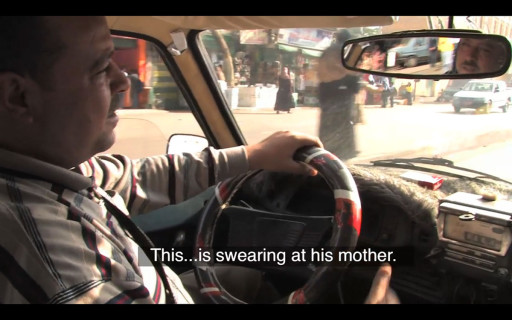
CAIRO DRIVE from director Sherief Elkatsha took home a prize at this year's DOC NYC festival.

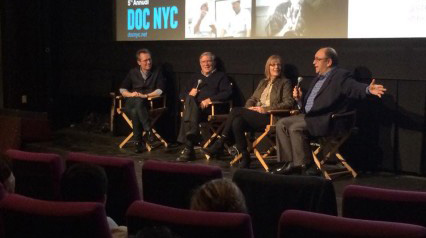
This week DOC NYC finished out it’s fifth year. Writing for Indiewire, Ben Travers reported that CAIRO DRIVE, HOMME LESS and MIRROR IMAGE took home DOC NYC’s jury awards this year, while THE HAND THAT FEEDS won the festival’s audience award. Manori Ravindran of Realscreen also had coverage of the awards. Also at Indiewire, Anthony Kaufman took note of DOC NYC’s emergence as a major documentary showcase. At the POV blog, Tom Roston covered Sundance Institute doc head Tabitha Jackson’s DOC NYC keynote address calling for increased focus on artistic practice in documentary, while Scott Macaulay covered the speech for Filmmaker Magazine.  Paula Bernstein interviewed Jackson following her address. Writing for Nonfics.com, Daniel Walber shared six discoveries from the festival. VOD platform VHX shared a slideshow presented at the festival. Finally, Indiewire compiled all of their coverage on one DOC NYC news page, containing a host of links to recaps of panels and other events (definitely worth a browse.)

At Realscreen, Kevin Ritchie reported on this year’s winners of the BRITDOC Impact Awards. The POV blog also recapped the winners. In a piece for Indiewire, director Joshua Oppenheimer shared his thoughts on the role of the documentary filmmaker and the idea of impact.

At the What (Not) to Doc blog, Basil Tsiokos provided an overview of the International Documentary FIlm Festival Amsterdam (IDFA) in two parts: part one and part two. Writing for Realscreen, Manori Ravindran covered an IDFA panel on the issues faced by female directors and other women in the doc world. Ravindran also spoke with festival head Ally Derks about the event. At the POV blog, Kel O’Neill spoke with IDFA DocLab head Casper Sonnen. Also, The D-Word documentary forum has a dedicated thread to the festival (registration and professional status required). And Inoo Kang spoke with Eline Jongsma about her immersive documentary project EMPIRE.

Continue reading…


The War Room: The Clinton Campaign and The Politics of Personality


This post was written by STF blogger Krystal Grow.

Elections are always electric. In it’s worst form, political turmoil is abrasive and dangerously discouraging to potential voters. But the energy that radiates from the political process is helplessly contagious, and on this past Election Night in New York City, a crowd gathered at the IFC Center to see filmmaking team D A Pennebaker and Chris Hegedus dissect the campaign machine behind Bill Clinton’s 1992 presidential victory.

THE WAR ROOM was intended as a portrait of a candidate on his way to the Oval Office, but after Pennebaker and Hegedus unsuccessfully attempted to follow the Arkansas governor Bill Clinton, who was largely unaccessible on the campaign trail, they realized that the charisma the Clinton brought to podiums and press conferences was in abundance among the campaign staff.

Led by James Carville, the whip-smart, fast-talking southerner, and the brilliant and charming George Stephanopolous, the Clinton campaign team was a new breed of political organizers. A grassroots team that was mobilizing voters in the pre-crowd-sourcing days, Clinton staffers were endlessly enthusiastic, and determined to succeed.

“We walked into George’s office and told him we wanted to do a film about a man becoming president, which was foolish of us, really,” Pennebaker said in the Q&A following the film. “They were after the sound bites for the six o’clock news, but George said that if James said it was ok, we could do it.”

Luckily, Carville was already a fan, having seen Pennebaker’s rarely seen 1964 film CAMPAIGN MANAGER that followed John Grenier as he orchestrated Barry Goldwater’s nomination at the Republican National Convention. After Carville OK’d the project, Pennebaker and Hegedus dove in, employing their fine-tuned vertie techniques to capture the campaign chaos and Clinton’s eventual triumph in the 1992 Presidential election.

“We didn’t go in as press,” Pennebaker said, “we just hung out and soon we became a part of it.” Following the early stages of the primaries and capturing the campaign team’s candid responses to attack ads and tabloid controversies, the duo uncover the personal triumphs behind the political machine. In one of the most moving moments of the film (of which there are many), an emotional James Carville addresses his colleagues in The War Room, the official name for wherever the Clinton campaign staff had converged, on the evening before election day. Holding back tears while others around him wept openly, Carville paid his respects to a team about to deliver the next president to the White House.

“When you see a film like this so many years on, the context changes,” Hegedus said, “but looking back, it was really an incredible campaign. We would have voted 5 times if we could have. The energy was just infectious.”

Stranger Than Fiction’s twenty-fifth season features an eight-week tribute to the careers of D A Pennebaker and Chris Hegedus.

Krystal Grow is an arts writer and photo editor based in New York. She has written for TIME LightBox, TIME.com, LIFE.com, the New York Times Lens Blog, the Magnum Foundation and the DOC NYC blog. Follow her on Twitter and Instagram @kgreyscale.